
House panel advances Second Amendment Protection Act after heated testimony from law enforcement
Get AI-powered insights, summaries, and transcripts
Subscribe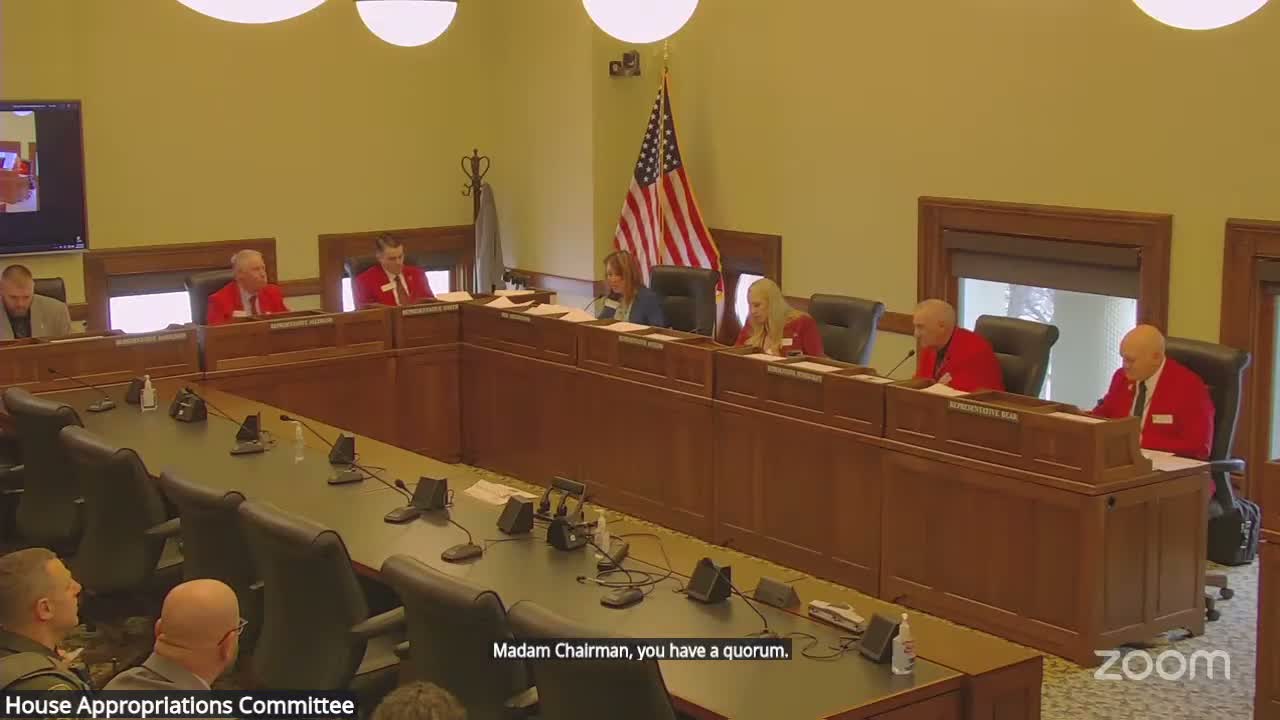
Summary
The Select Water Committee passed House Bill 130, the Second Amendment Protection Act (SEPA), as amended after extended testimony from law-enforcement leaders who warned the measure could hamper federal task-force cooperation and increase agency liability; supporters said the bill clarifies state protections without targeting officers.
Representative Warf, the bill sponsor, told the Select Water Committee that House Bill 130 — described in committee as the Second Amendment Protection Act or SEPA — adds civil remedies to existing criminal penalties and is intended "to insulate our law enforcement officers from ever being tasked to assist the federal government in violating our second amendment rights," while preserving the ability to assist federal authorities when state law is not violated.
The bill, Warf said, adds civil penalties against agencies whose policies direct officers to assist in enforcement actions that would violate state Second Amendment protections; it also clarifies that state law governs the conduct of Wyoming officers. "It basically insulates our law enforcement officers from ever being tasked to assist the federal government in violating our second amendment rights," he said.
Why this matters: supporters said the measure gives Wyoming citizens a civil path to challenge agency conduct without exposing individual officers to personal lawsuits; opponents — including sheriffs, chiefs and the Wyoming Highway Patrol — said the language as written could create operational uncertainty, strip protections and open agencies to costly litigation that would harm public safety and recruitment.
Law-enforcement leaders told the committee they had supplied written amendment requests and asked lawmakers to narrow several provisions. "The bill that you have in its current form just simply does not work," said Sheriff Aaron Oppelhans of Albany County, who testified the measure "adds liability" and could force agencies to remove personnel from federal task forces. Alan Thompson, executive director of the Wyoming Association of Sheriffs and Chiefs of Police, said the group’s 23 sheriffs and many chiefs oppose the bill in its current form and urged edits to shift from an "interested party" standard to an "injured party" standard for civil suits.
Sponsor and supporters pushed back. Aaron Dorr, representing Wyoming Gun Owners, said the bill explicitly excludes seizure of firearms as part of Wyoming-law investigations and does not prevent Wyoming agencies from receiving federal assistance "to aid in the enforcement of the laws of Wyoming," including personnel, money and databases. Mark Jones, national director for Gun Owners of America, said the bill was drafted after considering earlier court rulings and is different from a Missouri law struck down by the Eighth Circuit.
Public-safety example: Chief Travis Koltyska of the Sheridan Police Department recounted a 2024 murder investigation in which federal partners helped identify and oust a person who supplied firearms to a prohibited possessor. "To do that effectively, we must retain the ability to work with all available partners, including federal agencies," Koltyska said, warning that cooperation restrictions could have prevented accountability in that case.
Amendment and vote: Representative Harrelson offered an amendment to move a civil‑action clause from one section to another to narrow who can sue; the committee adopted the amendment. The committee then voted by roll call and approved House Bill 130 as amended; the roll call was recorded as six ayes and one no. The transcript records a committee member volunteering to carry the bill to the floor, identified in the record as "Representative Harold oh, Wharf." The committee minutes list the roll-call participants and their votes.
Next steps: House Bill 130 passed the committee as amended and will move to the floor for further consideration.
Representative Harrelson said during debate that members and stakeholders must keep working to refine the language, and law-enforcement witnesses said they were willing to continue collaborating on a rewrite to preserve the bill’s intent while avoiding the operational harms they described.