
Committee advances bill to allow third-party building inspections with insurance and local oversight
Get AI-powered insights, summaries, and transcripts
Subscribe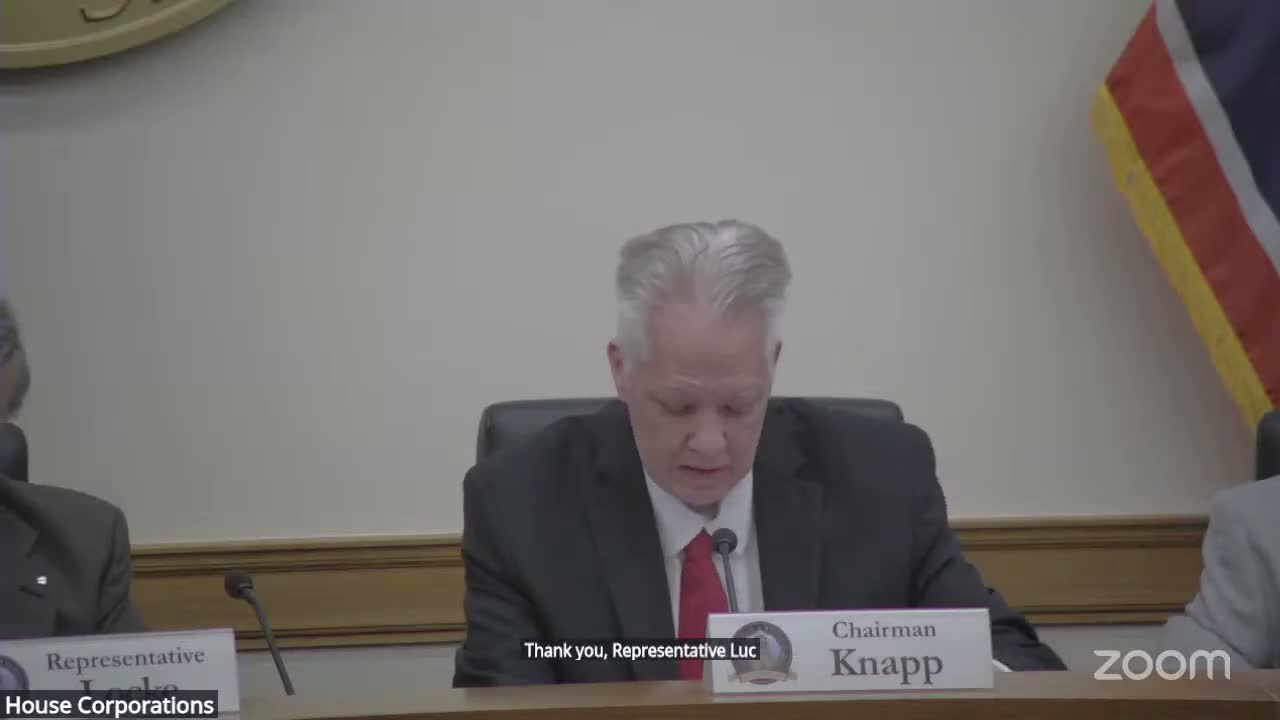
Summary
HB140 would let developers hire licensed third-party inspectors (architects, engineers, ICC-certified) at their own expense to reduce permit delays; the bill requires $1,000,000 professional liability coverage and preserves municipal authority over the final certificate of occupancy.
Representative Lee Feiler told the committee HB140 creates a framework for third-party building inspections to speed up permitting in areas where municipal building departments are backlogged. "Time is money," Feiler said, framing the proposal as a tool to reduce developer delays.
Under the bill, permissible third-party inspectors include architects licensed under Title 33, professional engineers, or ICC-certified inspectors who meet local qualification standards. The bill bars an inspector who prepared or stamped the plans from inspecting the same project and requires the third party to maintain professional liability insurance "in an amount of not less than $1,000,000 per claim." Municipalities retain final authority to issue certificates of occupancy.
Committee members pressed the sponsor on several points. Representative Webb asked whether third parties might charge far more than municipal fees or be used to favor acquaintances; Feiler said licensure, insurance and municipal oversight reduce that risk and municipalities may maintain preapproved lists. Representative Johnson and others asked how liability and insurance disputes would be resolved; Feiler pointed to existing licensing statutes and insurance requirements in the draft.
Municipal and rural officials generally supported options to relieve overloaded building departments but flagged practical concerns. Mayor Juarez (City of Mills) and Matt Murdock (president, Wyoming Association of Municipalities) said small towns that rely on state inspectors or have tiny staffs could benefit from third-party access but emphasized the need for ICC certification, insurance clarity and local rules to prevent favoritism. Americans for Prosperity and other private-sector witnesses expressed support for faster permitting and economic benefits.
After questions and public testimony, the committee voted to advance HB140 on a roll-call, recording five ayes. Sponsors and stakeholders said some technical amendments or additional details may be worked on in the committee-of-the-whole or on the floor.
Next steps: HB140 advances to the House floor for further consideration.