
Wyoming committee advances bills to allow constitutional campus carry and lower permit age to 18
Get AI-powered insights, summaries, and transcripts
Subscribe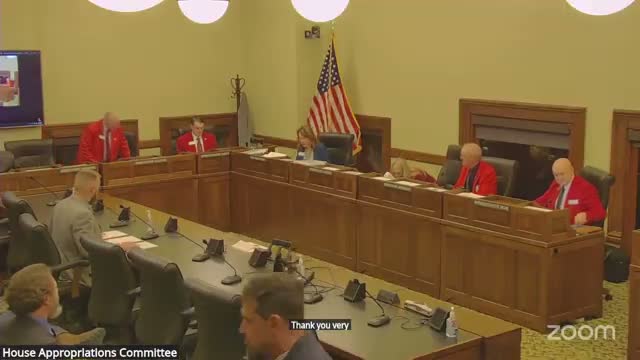
Summary
The House Appropriations Committee voted to advance HB95, permitting constitutional concealed carry at public colleges and universities, and HB96, lowering the concealed-carry permit age to 18. Supporters cited reciprocity and constitutional rights; colleges urged training provisions for 18–20-year-olds.
The Wyoming House Appropriations Committee on Monday voted to advance two related bills expanding firearm carrying rights on higher-education campuses and lowering the state's permit age.
Representative Gerald Harrelson, the sponsor of both measures, told the committee HB95 "eliminates the requirement for a concealed carry permit and allows constitutional concealed carry on campus, for the community colleges and the University of Wyoming," with an effective date of July 1, 2026. He said HB96 replaces the statute's age of 21 with 18 for the permitting language.
Why it matters: Together the bills would allow Wyoming residents and out-of-state students who qualify under constitutional-carry law to carry concealed on public college property, and would remove the special permitting prerequisites that currently limit issuance to older applicants or those meeting specified reasons.
Supporters and concerns Brian Gosch, a registered lobbyist for the National Rifle Association, said HB95 "gets us closer to what South Dakota has with allowing 18 year olds to carry on campus" and argued the change improves options for students and out-of-state residents who currently lack reciprocity. Mark Jones of Gun Owners of America echoed the point, saying several states already allow 18-to-20-year-old permittees and criticizing statutes that he said treat the Second Amendment as secondary.
College administrators did not oppose constitutional carry itself but asked the committee to consider training for younger permittees. Laurel Ballard, executive director of the Wyoming Community College Commission, said the colleges "are not asking not to do that. That's not where our issue is." Ballard and trustees suggested developing an appropriate training requirement for 18- to 20-year-olds.
Law-enforcement and juvenile court officials flagged implementation issues. Alan Thompson of the Wyoming Association of Sheriffs and Chiefs of Police said the current subsection the bills would repeal requires sheriff verification of personal knowledge in some cases and that removing it "would clarify statute and give better direction to sheriffs," but also noted county-by-county differences in practice. Corinne Schmidt, director of the Department of Family Services, warned juvenile adjudications are confidential and may not appear in background checks, creating possible gaps in screening.
Votes and next steps The committee took a roll-call vote on HB95 and HB96. For HB95 the tally was 6 ayes and 1 no (Representative Sherwood opposed). For HB96 the committee likewise recorded 6 ayes and 1 no. Both bills were reported from committee to the next stage with the sponsor saying he will continue to work with colleges and legal staff on clarifying language.
What remains uncertain: Committee members pressed for clarity on carve-outs (daycare facilities, athletic events where alcohol is sold), the handling of juvenile-court records in background checks, and whether additional statutory language or training requirements for 18- to 20-year-olds should be adopted before floor debate.
The bills are expected to move to the House floor after the committees complete any technical cleanup and follow-up with stakeholders.