Get Full Government Meeting Transcripts, Videos, & Alerts Forever!
Get email alerts on the Infrastructure topic
No spam. Unsubscribe anytime.
Public Works outlines Lone Star, University Boulevard Complete Streets and resurfacing plans
Summary
The city's public works director reported Lone Star Road's first phase will be complete in 2026, FDOT pledged $2M for landscaping plus $4M for intersection improvements, University Boulevard Complete Streets is in project development with construction expected around 2027, and the city currently resurfaces about 75 miles of road per year out of roughly 3,800 miles.
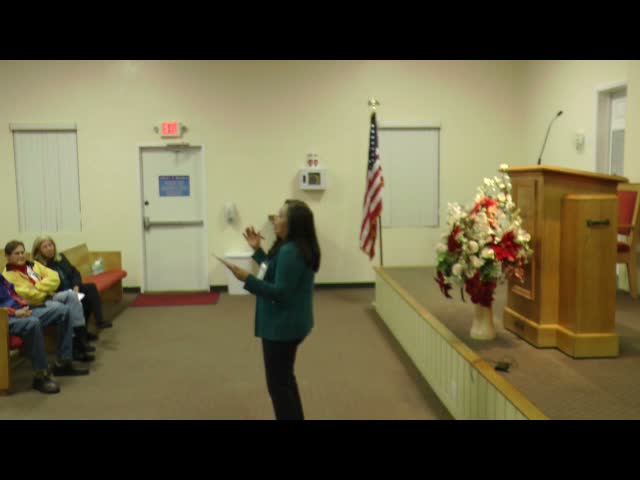
Nina Sickler, director of public works, briefed the District 1 town hall on infrastructure projects and pavement management. She said the Lone Star Road extension recently started and the first phase is expected to be finished in 2026; the second phase will begin the following summer. FDOT has committed $2 million for landscaping along the corridor and another $4 million for intersection improvements, Ms. Sickler said, and the city has money set aside for full design pending FDOT approvals.
Sickler gave an update on the University Boulevard Complete Streets project, which is in the Project Development & Environmental (PDE) phase. The city and design team are developing alternatives emphasizing walkability and economic development rather than vehicle throughput; a public meeting is expected in four to six months with construction anticipated around 2027. She said undergrounding overhead electric is being studied but will depend on available funding.
On resurfacing, Sickler said the city can currently resurface about 75 miles of roads per year while the system contains roughly 3,800 miles, meaning a complete cycle would take many decades at current funding levels. Public Works plans to develop deterioration models and an asset maintenance program to show elected officials how much annual funding would be required to reach target condition ratings.
Residents asked about potholes and short‑lived contractor repairs after fiber installations; staff reminded people to file a service ticket (311) or contact the council office so the work can be tracked and escalated if necessary. For sidewalk requests the department said there is a sidewalk fund for smaller installations; if a particular segment would cost more than $100,000 it will be handled as a capital project and prioritized accordingly.