Prince George's Community College outlines expansion of workforce pathways, AI and quantum coursework
Loading...
Summary
PGCC told the county committee it is expanding dual-enrollment and career pathways, adding AI and quantum coursework, growing cybersecurity and workforce programs, and reported $5.2 million in federal funding expirations affecting targeted student supports.
Prince George's Community College told the Prince George's County Council Education and Workforce Development Committee on Feb. 9 that it is expanding career and academic pathways to meet local labor demand while adding new technical certificates in artificial intelligence and quantum-related coursework.
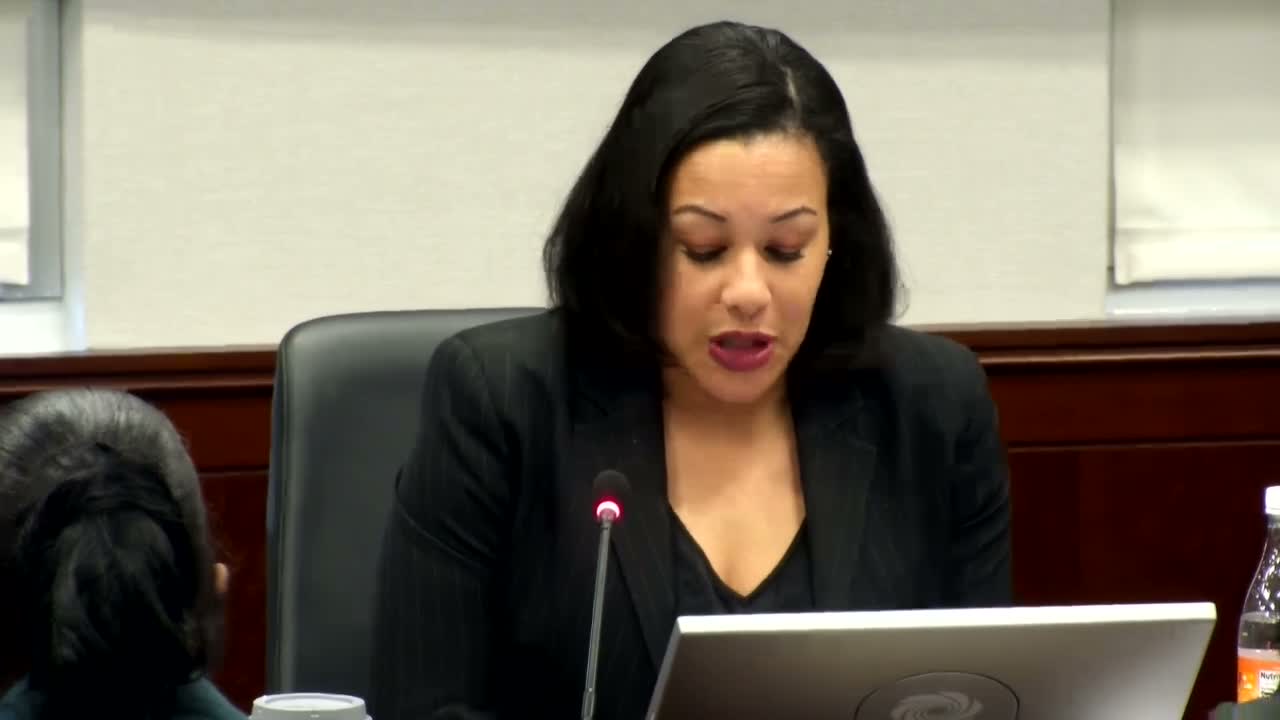
"We were cresting again near 30,000 students," said Dr. Felicia Williams, president of Prince George's Community College, describing the college's mix of credit and continuing-education enrollment and its focus on programs that deliver measurable return on investment for students. Williams said the college is pursuing a countywide expansion of dual-enrollment and early middle college programs and expects dual-in-school opportunities to be available at each Prince George's County high school by the 2026–27 school year.
The college highlighted three technical expansion areas: quantum courses sequenced into computer science and engineering programs, an AI certificate already adopted into the curriculum, and continued investment in cybersecurity programs that the presenters said include National Security Agency recognition and heavy participation in the state's CyberReady initiative. "We have brought the content curriculum into our degree program at the college," Williams said of quantum; she described partnerships with the University of Maryland and George Mason University that include seats in a George Mason residential summer camp for local students.
PGCC also described short-term workforce training for adults, including the Team Builders Academy, a 14-week subsidized construction-and-trades training program funded in partnership with Washington Gas and Pepco that provides multiple certificates and executive mentoring intended to speed hires. Presenters said the college has obtained federal and state support for CDL training and school-bus endorsement programs, and is broadening apprenticeships into hospitality and other nontraditional apprenticeship tracks.
On student outcomes, Williams said state data robustly captures graduate outcomes at one year post-completion but that earlier post-graduation employment data are limited by low survey response rates; the college conducts graduate surveys in the months following completion to gather earlier signals. Williams told the committee the college is redesigning an entry-level technology requirement so all degree-seeking students receive baseline instruction on responsible AI use while offering deeper certificate and degree options for students who choose to specialize.
Williams also reported financial headwinds: several federally funded, gender-targeted student programs have had their funding expire in phases, and she said the college has lost $5,200,000 in federal funding related to those programs, with additional expirations scheduled through June 2026. The college proposed that county budget planners consider supporting continuity for effective student-support programs.
Chair Veil Adams Stafford and other members pressed presenters on K–12 alignment, supports to help students pass industry certification exams, and the feasibility of expanding CTE dual enrollment. Williams acknowledged testing-literacy gaps for some students and described adult-level programs that partner with labor unions; she said CTE dual enrollment is an area of aspiration with limited traditional models currently operating.
The committee received the briefing and did not take formal action during the meeting.