
Soil Conservation District reports growth in farmers, federal contracts and ag‑preservation work
Get AI-powered insights, summaries, and transcripts
Sign Up Free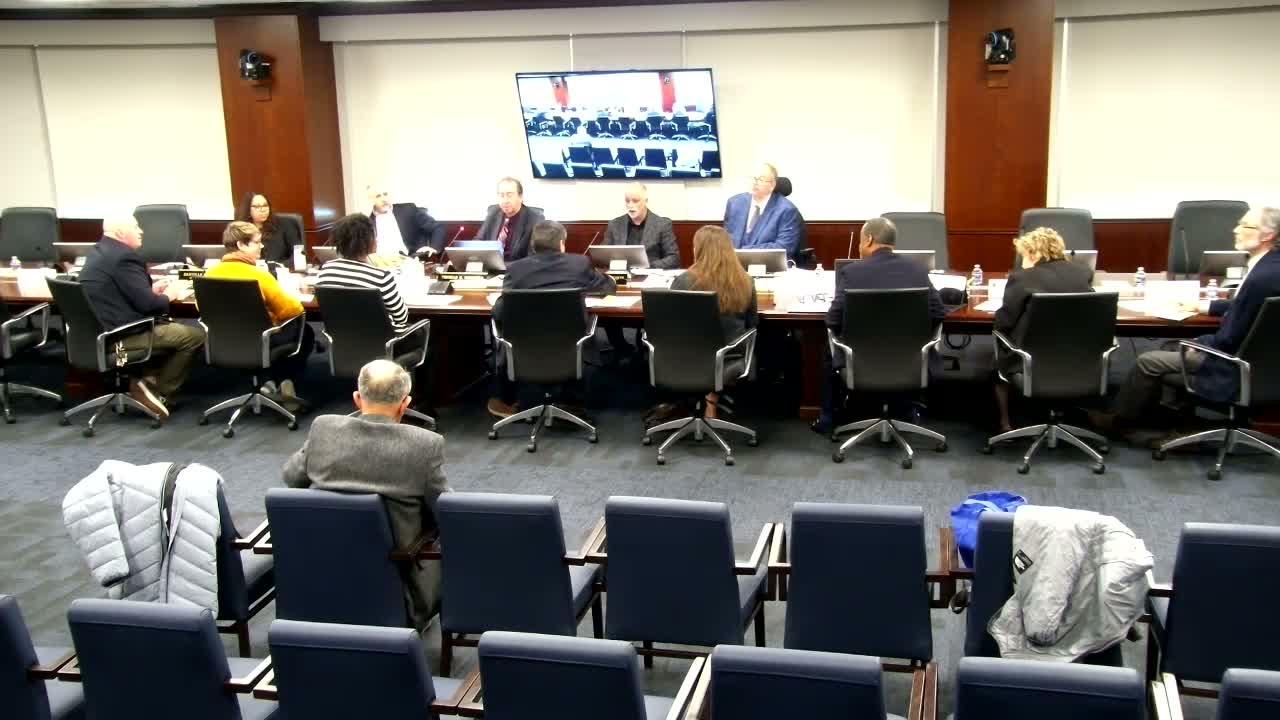
Summary
The Soil Conservation District reported 102 new cooperative agreements over two years, nearly 60,000 acres of county farmland (about 40,000 privately owned), and a jump in federal conservation contracts — 78 contracts in 2025 obligating about $1.78 million to local producers. Staff also discussed agritourism zoning challenges and a feasibility study for an Ag & Food Security Innovation Center.
Steve Darcy, executive director of the Soil Conservation District, told the Transportation, Infrastructure, Energy and Environment Committee on Feb. 12 that the county’s agricultural sector is expanding and receiving more federal conservation support.
Darcy said the district signed 102 new cooperative agreements with producers over the past two years — 55 in 2024 and 47 in 2025 — and that staff wrote more than 100 soil conservation and water‑quality plans last year covering almost 10,000 acres. He said the county has about 60,000 acres of farmland, roughly 40,000 of which is privately owned, with the remainder in government ownership or use.
Darcy reported a marked increase in federal conservation contract participation: 5 contracts in 2021 grew to 78 in 2025, with about $1,780,000 obligated to producers in Prince George’s County; he said 43 of those contracts went to urban farmers and 24 to traditional farmers.
On preservation, Darcy said the county currently has 83 preserved farms totaling more than 7,500 acres and six additional farms in the pipeline; he expects the county to reach 8,000 preserved acres by 2027 if funding is available. He said Park and Planning has not funded recent preservation requests but that ag transfer tax and other mechanisms can be used to support preservation purchases.
Darcy and Kim Rush Lynch also described operational challenges for expanding agritourism and urban farming — parking on grass, restroom requirements, dual‑principal‑use questions where residences and urban farms overlap, and inconsistencies between zoning and emerging farm business models. They urged the county’s zoning and code staff to consider clarifying language to reduce inadvertent violations for urban farms.
The district is also working with the county revenue authority on a 14‑month feasibility study for an Ag & Food Security Innovation Center (AFSC) to evaluate regional processing and slaughter capacity, after which a business plan would follow if the study supports implementation.
Committee members praised the work and discussed zoning changes, auxiliary dwelling units for farm workers and the need to streamline appointments to advisory committees; the meeting concluded with a motion to adjourn that passed on a voice vote.