
Texas Supreme Court hears argument over whether trial start can trigger interlocutory appeal
Get AI-powered insights, summaries, and transcripts
Subscribe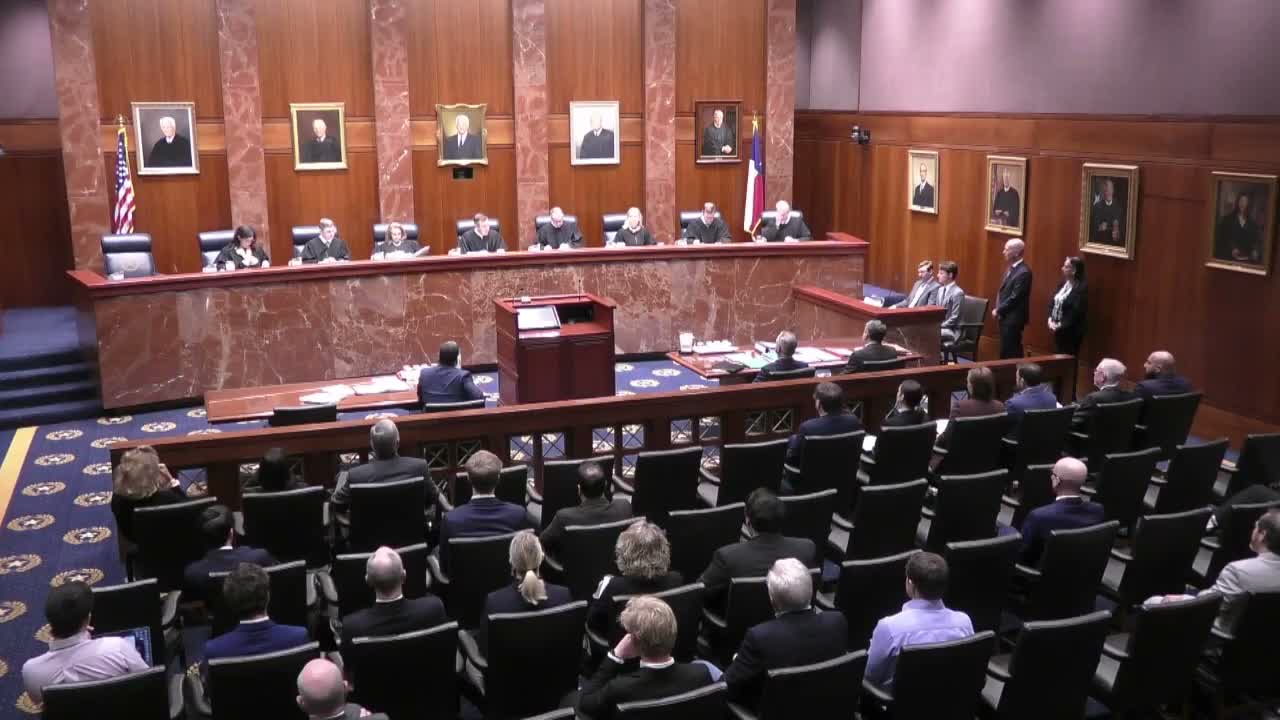
Summary
At oral argument in Paxton v. City of Austin, counsel argued that a trial court’s statement that it will "go to trial" amounts to an implicit denial of a plea to the jurisdiction and therefore permits interlocutory appeal under Civil Practice & Remedies Code §51.014; other justices pressed whether the statute requires a written order and whether bond-validation rules change the analysis.
The Supreme Court of Texas heard argument on whether a trial court’s commencement of trial can constitute an implicit denial of a plea to the jurisdiction and thus permit interlocutory appeal under Civil Practice & Remedies Code §51.014.
May it please the Court, counsel for the petitioner told the justices that when a trial judge announces on the record "we're going to trial" and begins calling witnesses, that statement functions as an oral order denying the jurisdictional plea and should trigger immediate interlocutory review. "On our view, it was the oral ruling of the trial, the judge commencing trial," counsel said, adding that the record shows the court told counsel "we're gonna call your first witness in 5 minutes" and invited notice of an interlocutory appeal.
The issue matters, counsel said, because interlocutory review is the mechanism the legislature provided in certain jurisdictional contexts to avoid litigating issues in a full merits trial. Counsel asked the Court to reverse the Fifteenth Court of Appeals and reach the merits of the attorney general’s plea.
Several justices challenged that position by pointing to the text and operation of the appeal statute and appellate rules. One justice asked why the statute would not require a written order, noting that appellate deadlines commonly run from the date a trial court signs an order. Justices asked whether the Legislature’s choice to permit interlocutory appeals in certain narrow categories means the courts should read the requirement strictly.
A second strand of argument focused on bond-validation proceedings described in the record as "12 o 5" matters. A different counsel observed that the Texas Legislature created expedited validation procedures to prevent public securities from being held hostage by protracted litigation and that a trial court in a 12 o 5 proceeding must, by statute, schedule trial promptly. That counsel argued those statutory aims weigh in favor of permitting interlocutory review when a trial court effectively refuses to resolve jurisdictional questions before starting a statutorily fast-tracked validation trial.
Justices and counsel also debated remedies. Several justices asked whether mandamus would have been the proper vehicle and whether the attorney general had time to seek mandamus after an earlier hearing. Counsel replied that mandamus could sometimes be the correct route but that the statute and this record support interlocutory review where a trial court has reached the merits by commencing trial.
In rebuttal, petitioner’s counsel reiterated that the word "order" in the interlocutory statute should not be read to require a written, signed order in all circumstances. "Order in a does not always mean written order," counsel told the Court, urging that an oral ruling that the court will proceed to trial is an implicit denial of the plea.
The Court asked no further questions, submitted the case and took recess. No decision was announced from the bench.
The argument centered on the statutory construction of interlocutory appellate jurisdiction under §51.014 and the practical consequences for expedited proceedings such as bond validation under the statute identified in the record as "12 o 5." The Court will issue an opinion resolving whether, and under what circumstances, the commencement of trial constitutes an appealable implicit denial of a plea to the jurisdiction.