
Texas Supreme Court weighs whether state pole‑attachment law can be enforced as a contract breach
Get AI-powered insights, summaries, and transcripts
Subscribe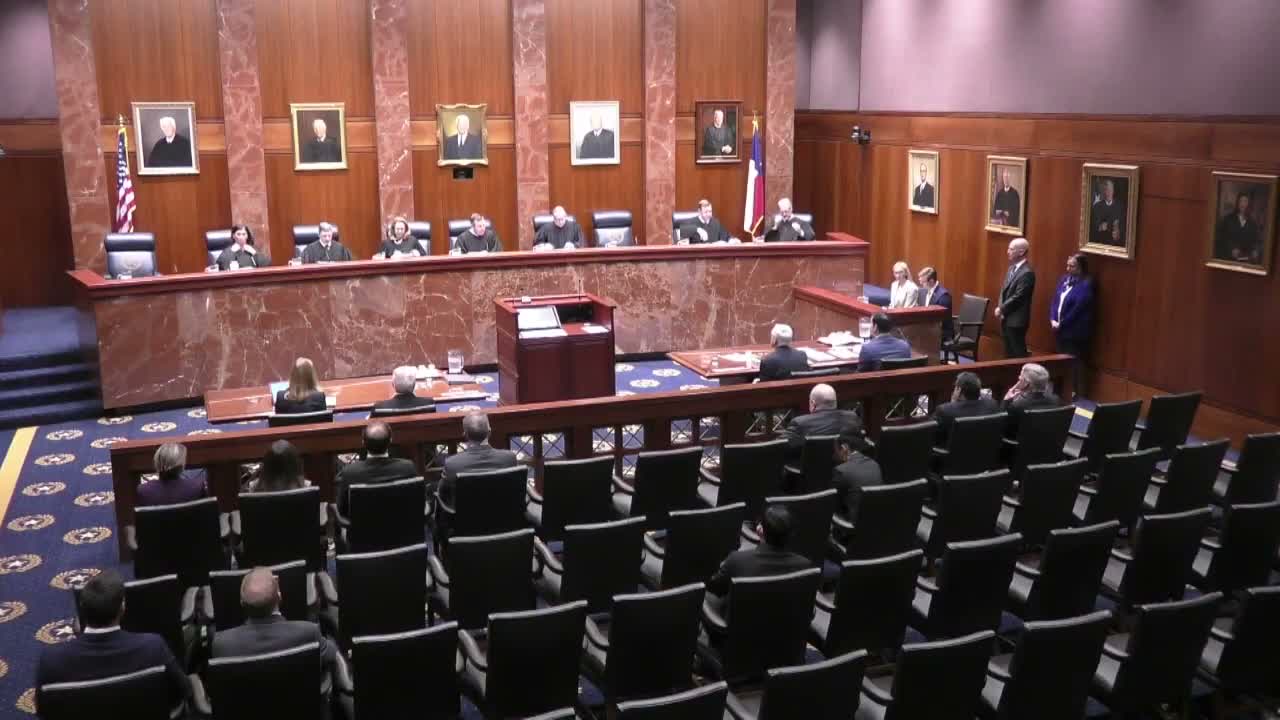
Summary
At oral argument in Spectrum Gulf Coast v. City of San Antonio, petitioner counsel argued that a contract clause requiring compliance with all laws and an evergreen provision together make the Public Utility Regulatory Act §54.204 enforceable as a breach of contract; the city disputed that the 1984 agreement covers modern broadband attachments or that §54.204 applies retroactively.
The Supreme Court of Texas heard argument over whether the state’s anti‑discrimination pole‑attachment rule, Public Utility Regulatory Act §54.204, can be enforced as a breach of contract against a municipal utility in Spectrum Gulf Coast v. City of San Antonio.
Mister Alexander, counsel for petitioner Spectrum Gulf Coast, told the court that two contract provisions—section 6(a), a "comply‑with‑laws" clause, and an evergreen clause in Article 19—together support Spectrum’s claim that a municipal utility’s later violation of §54.204 can constitute a breach. "It requires us, in this case, CPS, to comply with any regulations, laws, or ordinances that may affect the rights of obligations of the parties," Alexander said, arguing the contract should be read to give effect to statutes enacted after the contract’s execution when those statutes affect the parties’ core rights.
Responding for the city, Mister Brown argued the 1984 written franchise covers cable television services and that subsequent legislative enactments such as SB 5 and related code sections do not show legislative intent to make §54.204 retroactive to existing municipal contracts. Brown said the legislature knows how to make laws retroactive when it intends to do so and pointed to statutory text and the structure of the reforms as evidence the change does not reach preexisting franchises without clear retroactive language.
Justices pressed both sides on contract structure and practical consequences. Several justices questioned whether the contract’s language or the parties’ long course of performance had expanded the agreement’s scope beyond a 1984 conception of "community antenna television" to include broadband and other modern services. Alexander pointed to subsequent PUC enforcement and the practical reality that the same pole attachments now carry multiple services, saying, "This law applied to all connections, all the attachments regardless of the services being provided." Brown countered that contractual text matters and that a court should not incorporate new obligations into an old contract absent clear language or demonstrated intent.
The bench also explored whether the agreement is an "evergreen" continuing contract or a series of renewals, a distinction counsel agreed can be outcome‑determinative: if the contract effectively is remade each term, later laws may govern; if it merely continues, original terms may persist absent express incorporation. The arguments touched on precedent the parties cited and hypothetical commercial consequences, including large capital investments and removal obligations on termination.
No decision was announced. The court recessed after concluding argument; further proceedings or a decision will be issued by the court in due course.