Get Full Government Meeting Transcripts, Videos, & Alerts Forever!
Get email alerts on the Zoning Text Amendments topic
No spam. Unsubscribe anytime.
Fairfax staff propose ADU occupancy change and multiple code clarifications; smaller gyms, urgent care, and vet clinics may no longer need special-use permits
Summary
City staff proposed removing age- and disability-based occupancy limits for accessory dwelling units, clarifying occupancy language, and reclassifying several uses so low‑impact indoor recreation, urgent‑care medical clinics and veterinary offices would be permitted by right below set size thresholds. Staff also recommended clearer definitions for donation containers and updated public-notice timing to match state law.
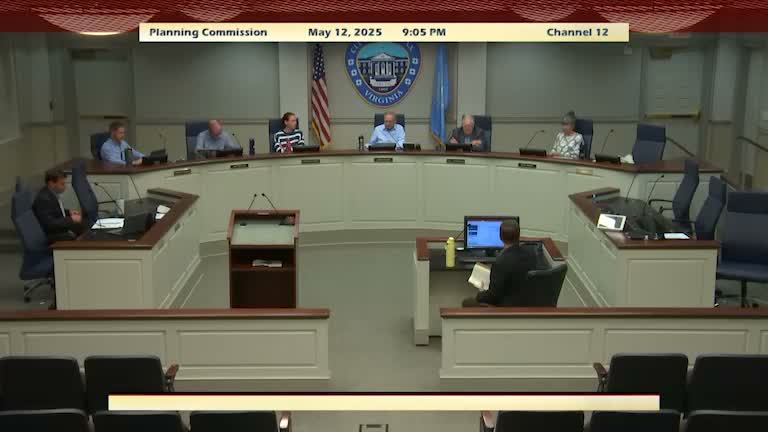
City planning staff presented a separate set of proposed zoning text amendments during the May 12 Planning Commission work session aimed at streamlining administration and reducing barriers to low‑impact businesses.
Mr. Foreman, presenting the package, said the ADU amendments are narrowly scoped: the owner-occupancy rule for ADUs would remain but the age- and disability‑based occupancy restriction would be eliminated. Foreman told the commission that the age/disability provision "didn't seem to bring any benefits to the city" and that removing it would ease administrative burdens without changing building- or safety-related ADU standards. Staff noted ADUs must still meet code and registration requirements and that the city already caps household composition per the ordinance’s household definition.
The same draft package included three categories of SUP (special‑use permit) simplifications. For indoor recreation, staff proposed a minimum‑size threshold of 30,000 square feet: larger venues (bowling alleys, skating rinks, big gyms) would remain SUPs, while smaller day spas, fitness studios and similar uses would be treated as permitted personal‑service uses. For medical care facilities, staff proposed treating uses under 10,000 square feet (typical urgent‑care footprints) as permitted in many commercial and industrial districts while reserving SUP review for larger surgical centers or hospital‑scale uses. For animal care, staff proposed splitting the current broad category into 'kennel' (boarding — which would continue to require SUP in many commercial zones) and 'veterinary clinic' (permitted); veterinary clinics could board animals only for medical or surgical reasons without triggering kenneling SUP requirements.
Staff also proposed many clarifying and ministerial edits: simplifying the restaurant use interpretation (remove obsolete sub‑types in the ordinance), a new definition for "donation drop‑off containers" (to distinguish them from recycling pods and permitted encroachments), and updating the public‑notice advertisement timing to match recent state statutory changes (first ad no more than 28 days before a hearing; second ad no less than 5 days before).
Commissioners had follow-up questions about possible effects of removing ADU age/disability restrictions on student rentals and about whether the proposed SUP relief might inadvertently encourage uses that create nuisances; staff said registration requirements, building-code inspections, and proposed use standards (noise mitigation, ventilation, animal-waste control, setbacks for outdoor animal areas) are meant to manage those risks. The commission did not vote to initiate code changes that night; staff will present drafts for formal initiation after the council work session scheduled for June 3.
Key thresholds in the draft package that will determine regulatory outcomes are: 30,000 sq ft for indoor recreation (to retain SUP status for larger venues) and 10,000 sq ft for medical care facilities (to keep particularly large or intensive medical uses subject to SUP review).