Get Full Government Meeting Transcripts, Videos, & Alerts Forever!
Get email alerts on the Adus Short Term Rentals Home Occupation topic
No spam. Unsubscribe anytime.
Logan council pauses major zoning rewrite on ADUs, home businesses and short-term rentals after long public hearing
Summary
After several hours of testimony, Logan City Council delayed a decision on a package of zoning and code changes that would loosen restrictions on accessory dwelling units, broaden home-occupation rules and rewrite short-term rental limits. Council directed staff to refine wording and return Oct. 1.
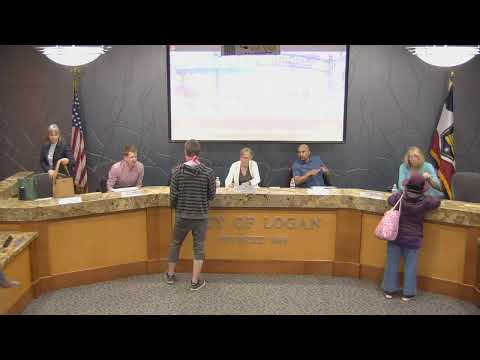
Logan City Council on a packed evening heard hours of public testimony and detailed staff presentations on a three-part code amendment that would change rules for home occupations, allow accessory dwelling units (ADUs) citywide and rewrite short-term rental (STR) limits.
Mike, a city planning staff member, told the council the package revises three code areas: home-occupation language, ADU standards (including allowing detached ADUs citywide, maximum detached ADU size as 50% of the primary dwelling or 1,000 square feet, and setbacks), and STR rules (separation distance and a citywide cap). The ADU changes would remove an exclusionary map around the university and add standards for detached ADUs: setbacks, a proposed maximum of 20 feet in height (discussed as an option) and limits intended to make the secondary unit subordinate to the primary house. Staff also described options for STRs: how to measure separation (current street-front methodology versus a property-line radius), distances from 500 to 1,000 feet and caps ranging from 1 to 3 per 1,000 population.
The public comment period ran long and split sharply. Community members in single-family neighborhoods said STRs and detached ADUs erode neighborhood character and invite absentee ownership. "This cannot stand to have commercial in the middle of a block when we have such a tight residential area," a longtime resident told the council. Others defended STRs and ADUs as tools to keep homes affordable and to rehabilitate blighted properties. Property manager Eli Hawkins argued enforcement, not more regulation, is the main problem: "Unlicensed short-term rentals are the reason that you're getting complaints, not the license fees," he said. Alex Watts, who said she depends on rental income to afford homeownership, said: "The only way I was able to afford that home is because I was planning on using it for that short term rental."
Council members probed operational details: whether detached ADUs should be limited to a fixed height or tied to the primary structure's height; whether external ADUs should be capped by lot size (staff proposed removing a 6,000-square-foot minimum); and how utilities and flat utility charges would be handled for a secondary dwelling. Staff confirmed ADUs would require building permits and landlord/business licensing where the ADU is legally established as a separate unit. For STRs, staff reiterated enforcement tools available under current code — conditional-use review, a three-strike licensing revocation, and fines — and noted platform notification could be used if the council sets a compliance grace period.
On the core policy trade-off, council members weighed two goals: protect neighborhoods versus getting unlicensed operators to come into compliance. Several members said stricter separation and a lower cap (for example, 1 per 1,000 and a 1,000-foot radius) would sharply reduce the number of legal STRs but could discourage noncompliant hosts from applying; looser rules might preserve existing licensed operators but expose neighborhoods to more commercial-style uses. Some councilors floated a compromise: retain strict separation for non–owner-occupied STRs but allow owner-occupied STRs a narrower separation or exemption while holding them to the same safety and parking rules.
At the end of the night the council did not adopt the ordinance. Instead it voted to continue Ordinance 24-18 to Oct. 1 without another public hearing and asked staff to return with clarified language that implements the council's preferred compromises and enforcement provisions. The continuation was framed as a chance to craft precise text on owner-occupancy carve-outs, the method to measure separation, and a potential compliance "grace period" to encourage legal registration.
What happens next
City staff will revise the draft code to reflect the council's directions and provide clearer, line-by-line language on ADU height and size limits, the fate of the 6,000-square-foot lot threshold, STR separation measurement, and options for a compliance period. The council scheduled the item to return Oct. 1.