
District unveils dual‑language redesign to concentrate programs into magnet sites; staff says kinder entry at four schools will be phased
Get AI-powered insights, summaries, and transcripts
Subscribe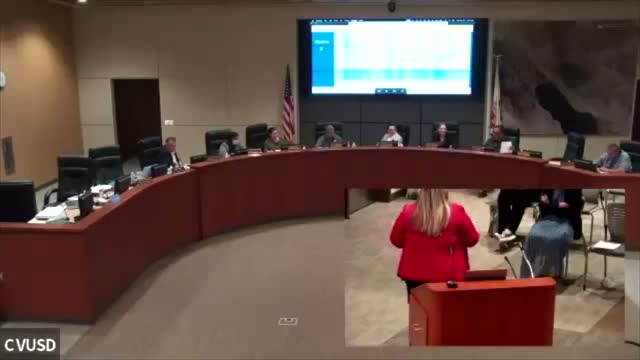
Summary
District leaders presented a magnet‑based redesign of the dual‑language program intended to boost cohort sizes, reduce combination classes, and strengthen the pathway to the Seal of Biliteracy; staff said kindergarten enrollment at four sites would be phased beginning 2026-27 while students already in the program would continue.
District instructional leaders told the Coachella Valley Unified board on Feb. 12 that the dual‑language program will be redesigned as a set of magnet-style sites to concentrate cohorts, reduce combination classes and strengthen the pathway to biliteracy.
"We are not eliminating the dual language program, but rather we are redesigning it to put students first," Tara Hinchen, director of MTSS Academics Elementary, said during the presentation. Staff outlined a 90/10 instructional model starting in kindergarten that would gradually shift toward a 50/50 model by fourth grade and said admission would remain parent choice.
Presenters said the phased redesign aims to ensure more consistent staffing, clearer vertical articulation from elementary through middle and high school, and higher rates of Seal of Biliteracy attainment. Karina de la Pena, director of MTSS academics elementary, said magnet sites will be placed strategically near schools being reduced so students still have access to a dual‑language seat and that the district will work closely with transportation to plan routes and supports.
Staff framed the shift as a response to long-term enrollment patterns that produced small upper-grade classes and many combination classes that were not financially sustainable. They told trustees the magnet approach should improve program stability by starting with fuller kindergarten cohorts at selected magnet sites, then allowing those cohorts to progress through elementary grades.
Board members and the public raised concerns about access and family disruption if nearby sites stop enrolling kindergarten cohorts. Staff said existing dual‑language students at the affected schools would be able to continue in the program through their current grades and that transportation options would be offered by choice for families seeking continued participation.
The board did not adopt any final policy changes for dual‑language enrollment at the Feb. 12 meeting beyond the direction embedded in the adopted stabilization action; trustees requested a written rollout plan, clear family communication materials, and additional recruitment and quality-assurance work before any broader program eliminations were implemented.
Next steps District staff will publish placement guidance, family engagement plans, and a transportation strategy; trustees asked for progress reporting and metrics tied to student outcomes and Seal of Biliteracy targets.