Get Full Government Meeting Transcripts, Videos, & Alerts Forever!
Get email alerts on the District Finance topic
No spam. Unsubscribe anytime.
District warns of multiyear shortfall, details bus procurement and tax uncertainties
Summary
Administrators told the board the district faces a multiyear deficit driven by state funding changes, a projected $500,000+ shortfall this year and up to $1,000,000 in cuts needed; the board discussed returning a faulty wheelchair bus, rebidding, and property-tax reform timing that complicates revenue forecasts.
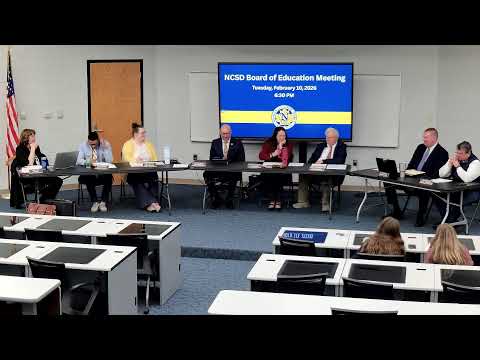
Administrators presented a detailed financial forecast on Feb. 10 that showed a near-term deficit and longer-term revenue uncertainty tied to recent state tax and funding changes.
Finance staff told the New York City School District Board of Education that January’s quarterly income-tax payment was slightly higher than last year’s same quarter by “just under $70,000,” but overall receipts remain below the prior year. The presenter said the district currently faces “a deficit this year of just over half $1,000,000” and recommended targeting approximately $1,000,000 in reductions across multiple years, relying in part on retirements and operational efficiencies.
The presenter described several drivers: state changes to special education reimbursement and foundation funding (which the presenter said reduced district state funding by about $300,000), the elimination of emergency levies by the state and the need to re-evaluate levy structures going forward, and uncertainty from four recently adopted property-tax bills that affect timing and credits. The presenter cautioned residents and taxpayers to consider paying only the first half of property taxes this year because state credits may be applied to the second half; “they’re just going to hold on to that money until the next year,” the presenter said of county handling of early payments.
Capital needs and buses: the finance presentation flagged capital outlay showing a negative amount after a newly purchased wheelchair-accessible bus was returned to the vendor because of “so many quality issues.” Staff said they will rebid through cooperative purchasing (Ohio School Council) and are evaluating a smaller wheelchair-capable van as an interim backup. Board members asked about procurement timing and financing; staff said purchasing new buses typically takes four to five months and that Baird could arrange financing for multi-bus purchases to smooth cash flow.
What’s next: staff will present financing options and bus cost estimates at the March meeting and continue to refine the forecast as the state clarifies implementation of recent tax legislation. The board signaled support for pursuing attrition and efficiency measures to reduce the projected shortfall while avoiding layoffs where possible.