Bayonne council advances multiple redevelopment financial agreements amid disputes over community benefits and neighborhood impacts
Loading...
Summary
The Bayonne City Council on Jan. 21 approved a slate of financial‑agreement ordinances tied to urban‑renewal projects while residents and council members pressed for clearer, binding community benefits, more parking and school funding. City officials said negotiated redevelopment packages include community‑benefit payments and required infrastructure provisions.
The Municipal Council of the City of Bayonne approved a package of second‑reading ordinances on Jan. 21 that authorize financial agreements with a series of urban‑renewal developers covering properties across the city, while residents and some council members challenged the deals as insufficiently protective of neighborhoods and city services.
Council President and staff opened the evening by noting required public notice and taking roll call. The council then moved through a long agenda that included second readings and final‑passage resolutions for multiple financial agreements for properties such as 62½–72 Prospect Avenue, 33–37 East 18th Street, several sites on Broadway and the former military‑base area. Where required by law, each item received a public hearing. For several contested items, speakers urged the council to require job‑training commitments, prevailing wages or stronger, enforceable community‑benefit provisions in the redevelopment agreements rather than leaving those measures voluntary.
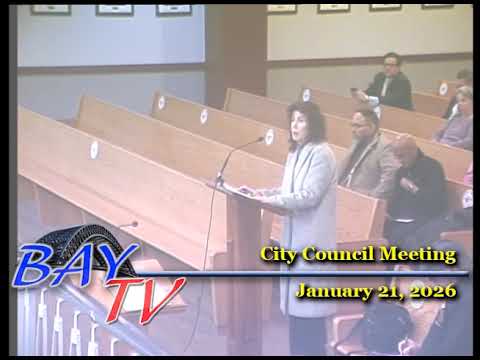
During the hearing on the Prospect Avenue financial agreement and a cluster of 'pilot' abatements, resident Sharon Nedrowski told the council the package offered “no givebacks to the communities,” criticized tall, dense buildings with little setback or green space, and said the deals would “destroy the quality of life” in longtime neighborhoods. Developers’ counsel Michael Miceli and city planning and finance staff responded that community benefits are negotiated in the redevelopment agreements (not the financial agreement), and that the city has been negotiating a standard community‑benefit payment that staff discussed in the meeting as approximately $2,500 per unit on many projects. City finance advisors explained that pilot agreements are often structured to make projects financeable and that many of the projects are phased and expected to generate increased tax ratables and infrastructure contributions when they stabilize.
Council members pressed for specificity. Several cited a set of 10 pilot projects that, according to staff, together produce roughly $1.6 million in negotiated community‑benefit payments and testified that those funds are typically directed to parks, parking, and infrastructure in redevelopment areas. Some council members said they would like to see additional binding elements — for example, workforce‑housing set‑asides or job‑provisions — included in redevelopment agreements where legally permissible.
Votes: The council recorded a series of roll calls approving final‑passage resolutions for multiple ordinances after closing public hearings and, in some cases, after brief debate. A motion to postpone one zoning ordinance to Feb. 18 carried unanimously; a number of the financial‑agreement ordinances were adopted by recorded votes listed on the record.
What happens next: Several items were carried or republished for corrected project descriptions and will return to the Feb. 18 meeting; others advanced to final passage and move toward execution of coordinated redevelopment and financial agreements. City staff and outside counsel told the council they will continue negotiating redevelopment agreements (where community benefits, infrastructure protections and occupancy triggers are set) and will provide memos summarizing the options for how pilot revenue could be shared or appropriated to school capital needs.
Vote-at-a-glance (selected items recorded on the meeting record): - Motion to postpone zoning ordinance (O1) to Feb. 18 — Motion seconded and approved (yes: Booker, Carroll, Perez, Wiemer, LaPalouse) (motion introduced SEG 120; votes recorded SEG 125–133). - Ordinance approving financial agreement for 62½–72 Prospect Ave (O2) — public hearing held, hearing closed and resolution ordering final passage adopted by roll call (ayes recorded; no sustained challenge to final passage) (discussion and public comment SEG 134–236; closing and votes SEG 901–914). - Multiple subsequent financial‑agreement ordinances (O3–O16 and O18–O21) for properties including East 18th St, Broadway parcels, Avenue E sites, and base/peninsula parcels — second readings and many final‑passage resolutions were moved and recorded on the council record; several items were carried for technical corrections or republishing prior to final action (see meeting minutes for the full roll‑call text).
Officials’ rationale: City planning and finance staff, and outside financial advisors present at the hearing, argued the pilot agreements and redevelopment packages help make projects financeable, require developer contributions for infrastructure (water/sewer connection fees, shoring or pipe‑protection measures) and will, over time, increase ratables and city revenue to address rising operating costs.
Council next steps: Staff committed to providing council offices with memos and project‑specific financial breakdowns, including comparisons of estimated conventional tax yields versus pilot revenue streams, and to identify how pilot‑derived funds might be allocated to schools or capital projects where legally permissible. Several items were continued to Feb. 18 for corrected notices or further documentation.
Notes: Exact vote tallies for each ordinance appear on the official meeting minutes and roll‑call transcript maintained by the City Clerk. This report only paraphrases vote outcomes as recorded during the meeting; the meeting transcript contains the verbatim roll‑call lines for each ordinance.