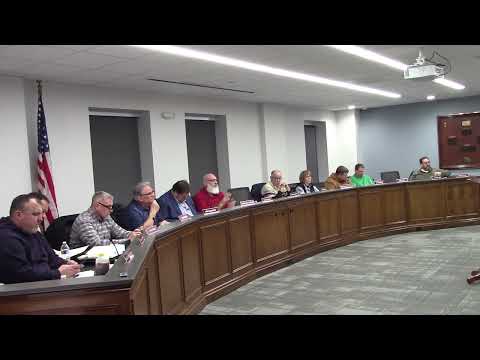
Munhall reviews regional solar PPA; presenters say deal could save roughly $800,000 over 25 years
Loading...
Summary
Nonprofit presenters outlined a power-purchase agreement (PPA) model that would finance, build and operate a ground-mounted solar installation for Munhall for 25 years, with monitoring, maintenance and an estimated borough-level savings modeled at just north of $800,000 over the contract term; councilors asked for production data, tax implications and follow-up documents.
Eric Robb and Leo Kowalski of the Adams Congress of Neighborhood Communities presented a regional power-purchase agreement (PPA) option for Munhall at the borough's Feb. 11 workshop, saying the arrangement would have an owner-operator finance and manage a solar array for 25 years while Munhall buys the electricity under contract.
The presenters said the PPA structure removes the need for upfront municipal capital and reduces operational risk: "We are here to ... ask answer any questions you have about the solar proposal for that site," Eric Robb said during the presentation. Leo Kowalski added that the proposal's financial model shows "we're modeling these at just north of $800,000 over the 25 year term," referencing lifetime cost savings compared with remaining on the market for electricity.
Why it matters: Council members pressed for concrete production and reporting details because municipal savings depend on how much power the system generates, how Duquesne Light treats certain charges and whether the borough can capture other benefits. Kowalski told the council the PPA normally includes real-time monitoring and contractor obligations to produce the contracted energy, and that municipalities typically have a buyout option after an initial IRS-defined period (presenters said that period is often about five years).
Key details presented: presenters said the PPA developer would finance, own and operate equipment for a 25-year term and be contractually responsible for maintenance, monitoring and production guarantees; projects in the regional cohort used a mix of public-site rooftops, parking canopies and ground mounts. Presenters noted several limits or trade-offs: Duquesne Light rules can limit full bill elimination because the utility continues to charge for distribution and other non-supply items; large systems can trigger higher interconnection costs (for example, reclosers) and can complicate tax-credit verification. Presenters said the financing pivoted from a for-profit developer to nonprofit CDFI capital to reduce interest and profit margins and that participating municipalities had put down small deposits (described as a roughly 5% safe-harbor payment) to preserve federal tax-credit eligibility.
Questions from council: members sought a clearer breakdown of how generation would translate to local savings (one councilor asked for recurring monthly or quarterly megawatt reports), and whether the project would trigger back taxes or obligations to the school district if the land's current use changed. Presenters said tax and land-use outcomes can vary by site and suggested coordination with the school district could mitigate tax triggers.
Next steps: staff agreed to circulate the presenters' slide deck and the comparative proposals the borough previously received; presenters said municipalities may sign individually and that target signing for some cohort members is by the end of the quarter or early next quarter. Councilors did not take a vote at the workshop.
Ending: Council members requested the project materials and asked staff to follow up with additional production and cost-breakout data before any decision is scheduled.