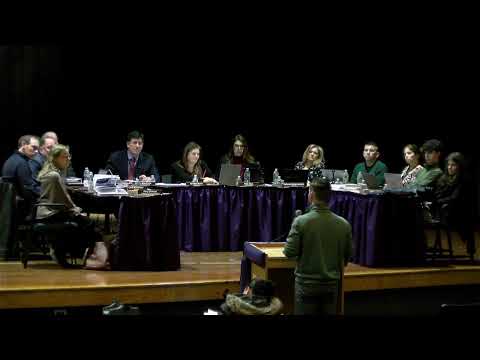
Sayville board reviews $107 million 2026–27 budget proposal, eyes reserve reductions and capital projects
Loading...
Summary
Assistant Superintendent Robert Bartels presented a proposed $107,000,007 budget with a 2.79% tax‑levy increase, a plan to reduce reliance on reserves, and a Proposition 2 to spend roughly $1.1 million from capital reserves on facility upgrades; the board set dates for further review and the budget vote.
Assistant Superintendent for Business and Personnel Robert Bartels presented the Sayville Union Free School District’s proposed 2026–27 budget to the Board of Education, laying out revenue assumptions, reserve use, program restorations and planned capital work. The revenue side includes an estimated state‑aid increase of a little more than $1.2 million, BOCES refunds rising, modest interest income, and other flat fees; Bartels said total externally sourced revenue (excluding tax levy and reserves) is expected to rise roughly 4–8 percent.
Why it matters: The proposed total budget figure Bartels used for planning was $107,000,007.21, with a proposed tax levy increase of 2.79% — under the state tax‑levy limit and requiring only a simple majority for passage. Bartels said recent increases in Universal Pre‑K funding in the governor’s budget raise local Pre‑K aid from about $745,000 to roughly $1,400,000, which “virtually fully funds that pre k program,” reducing pressure on the general fund.
Bartels described steps to shrink multi‑year dependence on reserves the district used after the COVID era, saying the board had previously budgeted to apply about $5.5 million but now expects to draw approximately $800,000 to close the current gap. He said the district aims to rebuild fund balance over time and flagged risk factors — notably cold weather and utility costs — that could affect projections.
On expenditures, Bartels said staffing and benefits account for roughly three‑quarters of the budget. He projected salary costs to rise about 2.5% overall, and noted health‑insurance costs have been large (he cited a 9% increase for 2026) and used a conservative 7% planning factor for future years. He outlined targeted restorations to curriculum writing, staff development, after‑school support and some athletic and instructional lines previously reduced.
Capital and propositions: The presentation included a list of capital reserve projects planned for Proposition 2, estimated at about $1.1 million from existing capital reserves. Projects listed were auditorium sound and lighting upgrades, converting a weight room into a fitness center and dance studio, math classroom upgrades, security camera and access‑control improvements, resurfacing three elementary blacktops, and renovating the middle‑school girls’ locker room. Bartels emphasized these funds are already in reserve and “it’s not gonna cost taxpayers another nickel” if voters approve using the capital reserve.
Next steps: The board scheduled a follow‑up presentation on March 12, additional review on April 21, a formal budget hearing May 12 (a statutorily required hearing at which the budget cannot be changed), and the district’s annual election and budget vote on May 19. Bartels’ presentation and the board discussion did not adopt the budget; the board will vote in the coming weeks as the process continues.
Representative quotes from the meeting come from the budget presenter and superintendent. Bartels opened the technical presentation by saying, “I wanna apologize in advance. This will probably be fairly boring. We have lots and lots of numbers.” On Pre‑K funding, he said the change “virtually fully funds that pre k program.” Dr. Farris framed the budget priorities and praised staff involved in the work.