
Leavenworth board debates $1.5M in cuts including possible David Brewer Elementary closure; motion to move 5th/6th grades and institute hiring freeze
Get AI-powered insights, summaries, and transcripts
Subscribe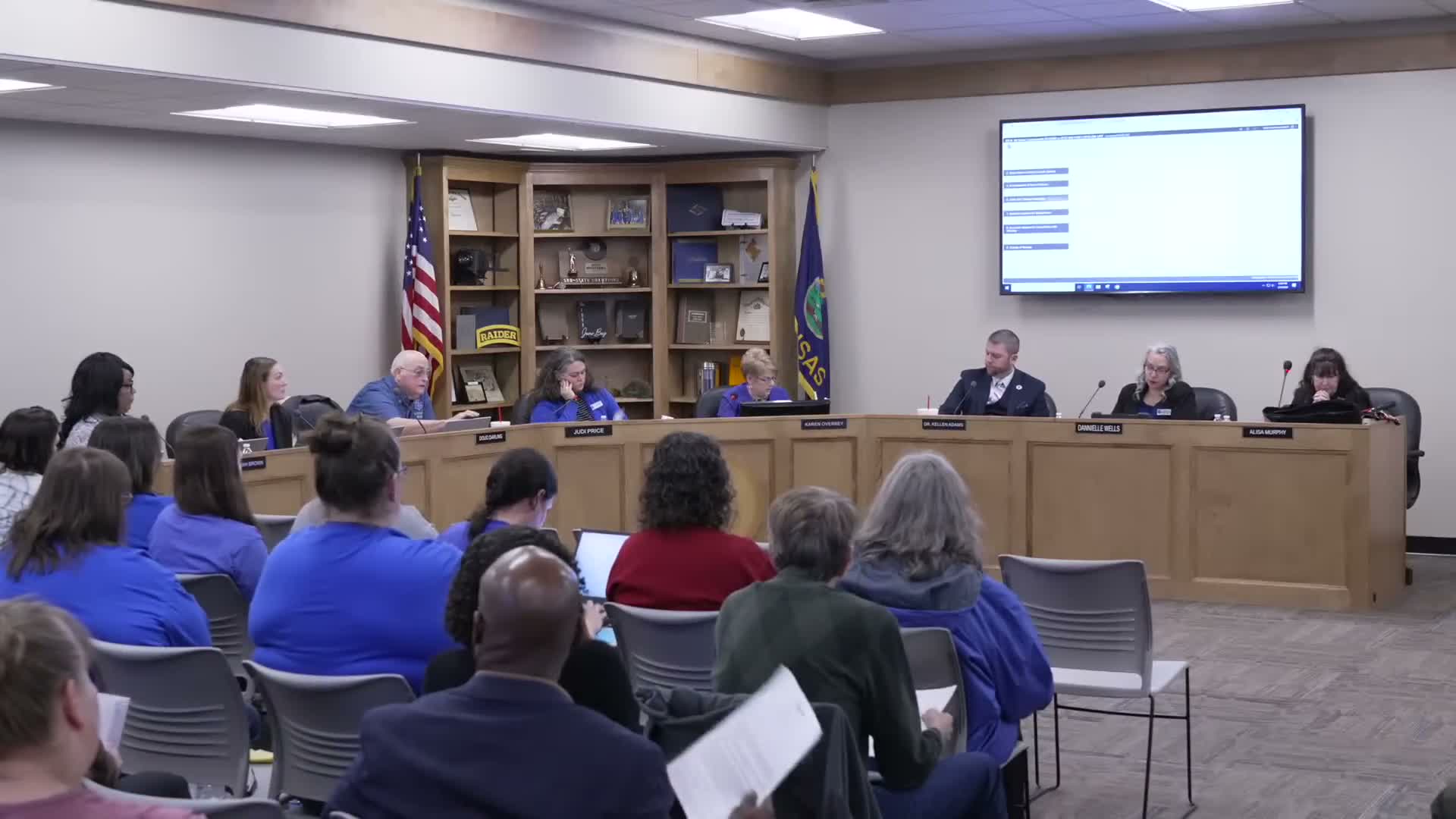
Summary
The Leavenworth Board of Education heard a superintendent presentation laying out options to close an elementary school or repurpose intermediate centers to close a roughly $1.54 million budget gap. A motion to combine moving 5th/6th grades with a hiring freeze was made and debated but not resolved by the end of the recorded meeting.
Leavenworth — The Leavenworth Board of Education debated a package of budget reductions on Feb. 9 that district leaders say are necessary to close a near‑term shortfall. Superintendent Dr. Helen Adams told the board the district faces declining enrollment and rising costs and recommended action this evening rather than delaying difficult decisions.
Dr. Adams said the district has seen enrollment fall from nearly 3,900 students a decade ago to projections below 3,000 and is contending with higher utility, insurance and personnel costs. "I really believe it will have an actually even more detrimental impact the longer you pump it," she said, urging the board to act on a recommended decision pathway.
The superintendent’s presentation estimated a total budget gap and cost pressures in the multi‑million‑dollar range and identified a set of options that, in combination, would close the district’s fiscal hole. The largest single savings option presented was closure of an elementary school (David Brewer or Anthony), which the presentation estimated could save about $1.5 million. Repurposing the intermediate centers by moving fifth and sixth grades was shown as another major option (just under $800,000 in savings), and a hiring freeze was presented as a complementary step.
A board member moved to adopt the package that pairs moving fifth and sixth grades with a hiring freeze to achieve roughly $1.5 million in savings; the motion was seconded and then subjected to extended board and public discussion. Several board members and public commenters questioned the choice of options, the process used to develop the recommendations and the community input summarized in the district’s survey. One board member said she had reviewed the survey responses and could not find a clear majority calling for school closures; Dr. Adams said survey responses were part of the initial recommendation but acknowledged parents and staff likely do not want a building closed.
Public commenters raised concerns about displacement and community impacts. A military spouse who spoke during the public comment period warned about additional trauma to students and the potential negative effect on neighborhood property values if a local elementary school were closed, saying, "You strip out that elementary school, you strip it from that family." Board members pressed staff for clarifications about transportation impacts (including whether busing would continue for students who qualify), special education services and the presence of FEMA shelter restrictions at any campus that might limit future uses.
Board discussion included operational considerations and alternatives: several members asked whether the district could repurpose spaces, move sixth grade back into elementary buildings, or shift programs like CTE rather than closing a campus. Staff acknowledged tradeoffs and noted some options — such as repurposing buildings — had not been fully researched and would require additional study.
The transcript ends with the motion pending and continued questions from multiple board members and the public. No final board vote on the budget‑reduction motion appears in the recorded segment; routine items earlier in the meeting (agenda adoption and the consent agenda) were approved and a staffing report was accepted by a 6–1 vote earlier in the session.
Next steps: board members requested additional detail on transportation, special education staffing and the financial analysis behind each option before scheduling a final vote.