
Minnesota DPS to start weapon screening at State Capitol at start of 2026 session
Get AI-powered insights, summaries, and transcripts
Subscribe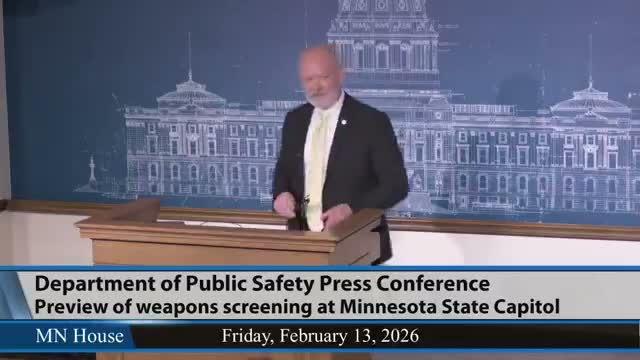
Summary
The Minnesota Department of Public Safety and State Patrol announced weapon screening at the State Capitol will begin Tuesday, citing an independent Axtell report and recent violent incidents; officials described four public entrances, exemptions for elected officials, permit procedures, and plans to monitor throughput and costs.
The Minnesota Department of Public Safety and the Minnesota State Patrol said they will begin weapon screening at the Minnesota State Capitol at the start of the 2026 legislative session, as part of a ‘‘layered’’ security approach recommended in an independent assessment.
"Weapon screening is a standard safety practice in government buildings across the country because it works as part of a layered approach with trained personnel monitoring and clear procedures," Commissioner Bob Jacobson said, announcing the change and citing the Axtell report as the recommendation that led to the decision. Jacobson said the department will pay initial costs from the State Patrol budget while legislators examine long-term funding.
Colonel Christina Bogojevic, head of the Minnesota State Patrol, described operational details for visitors. Beginning Tuesday, there will be four public access points with ADA-accessible screening equipment; bags and large items will go through a separate scanner; most visitors "should take a matter of seconds" to pass screening; and prohibited items will not be stored by the Capitol, officials said. "Plan ahead, carry fewer items when possible, and follow security staff instructions," Bogojevic said.
Officials said the process does not alter state law on lawful carry. "If it is legal now, it will be legal when screening starts," Bogojevic said. Visitors who hold a lawful permit to carry should alert security, will be briefly escorted aside for verification of their permit and government-issued ID, and then allowed to proceed. Elected officials are exempt from screening and will use a separate lane; staff are not exempt and will be screened like other visitors.
The department directed questions about the full list of prohibited items to the State Patrol website and referenced Minnesota statutes and administrative rules governing dangerous weapons; Bogojevic noted that sensitivity settings on screening equipment may be adjusted to reduce false positives for small items such as pocket knives.
Officials also said the Capitol will close to the general public at 4:30 p.m. on weekdays, with accommodations to allow public access when legislative hearings or floor sessions extend beyond scheduled hours. Tunnels and other nonpublic access points will be subject to restricted key-card access, and the Senate is implementing its own screening measures for its building.
Jacobson framed the change as an administrative safety measure under the commissioner's delegated responsibilities. "Statute specifically delegates responsibility for safety and security at the Capitol to the commissioner," he said, adding that the change responds to increased threats nationwide and incidents in Minnesota cited as motivating factors.
The agencies will demonstrate the equipment for media and said they will evaluate throughput and user experience during the first week and make adjustments to ensure screening remains efficient and not a deterrent to public access.
What happens next: officials said the demonstration will follow the briefing and that legislators will review costs and implementation details as the process proceeds.