
Panel advances bill to set law for regional stormwater systems and water-quality enhancement credits
Get AI-powered insights, summaries, and transcripts
Subscribe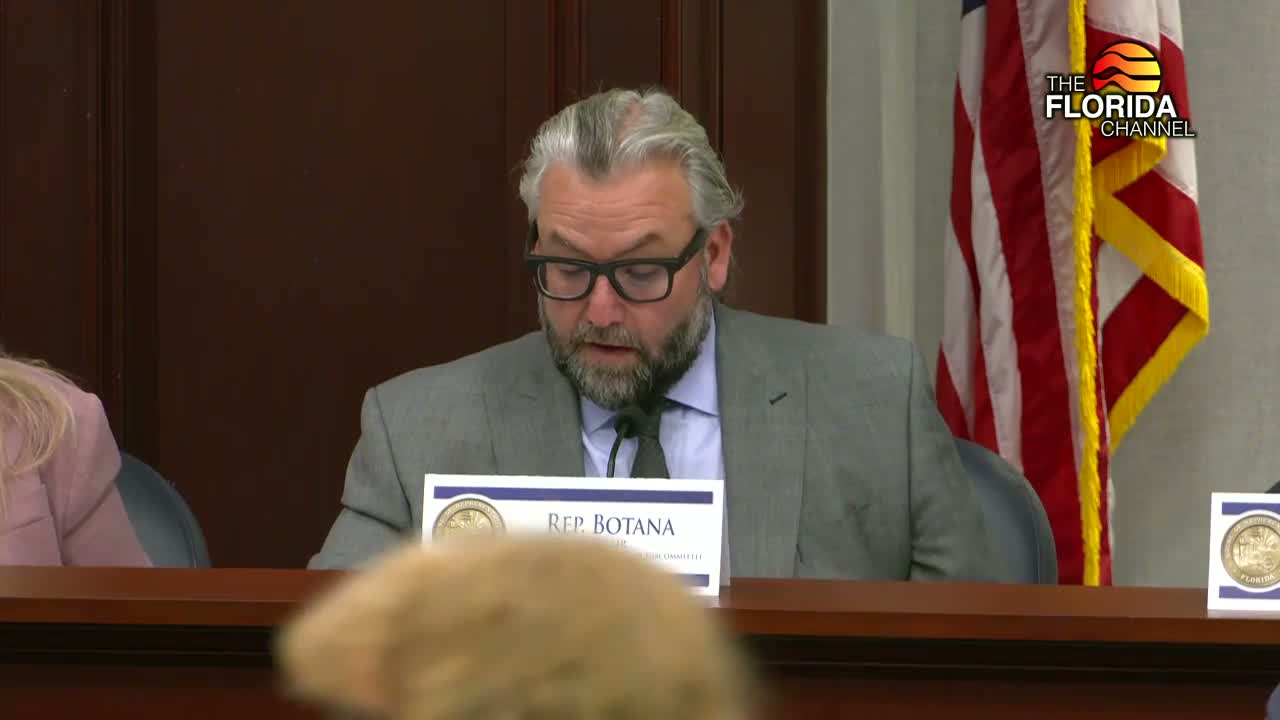
Summary
The committee adopted a strike-all amendment to HB 1457 that creates statutory definitions for regional stormwater management systems and water-quality enhancement areas, assigns perpetual responsibility for enhancement credits to generators, and restricts use of these tools for proposed new seaports; the bill passed 15-1.
Representative Gonzales Pittman presented HB 1457 as a bill to define regional stormwater management systems and water-quality enhancement areas (WQEAs) and to provide consistent methods for treating stormwater statewide. "This amendment...clarifies the requirements for 2 types of off-site treatment available to the permittees to meet water quality requirements and stormwater permitting," the sponsor said while explaining the strike-all amendment.
The amendment creates statutory definitions for compensating stormwater treatment, enhancement credits and pollutant reduction allocations; it sets financial-responsibility requirements for operators of regional systems; establishes processes for creating a drainage area served by a regional system; allows DEP to accept provisional WQEA permit applications until rulemaking is complete; and restricts use of these methods in the construction of proposed seaports.
Representative Cross questioned the bill's interaction with prior stormwater rule changes and asked why the seaport carve-out would exclude many existing ports. The co-sponsor answered the bill is prospective and would not retroactively affect existing ports, while one section shifts perpetual responsibility for maintaining enhancement-credit obligations to the generator. "It's my perpetual responsibility as a matter of fact to do that," the co-sponsor said, describing the generator's ongoing obligations to remove pollutants and to prove compliance to agencies.
The committee received public testimony in support from mitigation-banking, stormwater, and homebuilder trade groups. An adopted amendment addressed drafting concerns noted in committee; the final roll call recorded 15 yays and 1 nay (Representative Cross), and the bill was reported favorably.