Get Full Government Meeting Transcripts, Videos, & Alerts Forever!
Get email alerts on the Local Budgeting topic
No spam. Unsubscribe anytime.
Crescent City Measure S oversight committee reviews FY2025–26 spending plan and directs staff to draft resolution
Summary
The Measure S Oversight Committee reviewed draft spending for fire, police, streets and the pool for fiscal year 2025–26, heard detailed equipment and project requests, and directed staff to prepare a resolution for the council; the committee did not adopt a final budget at this meeting.
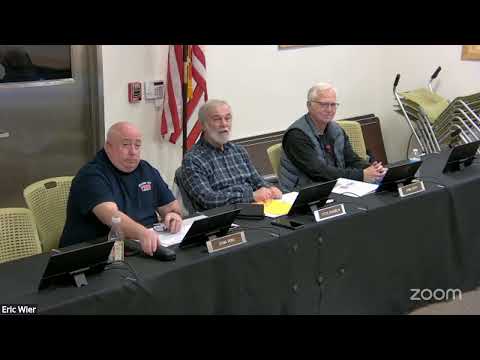
The Measure S Oversight Committee of Crescent City on a routine meeting reviewed staff recommendations for the Measure S fiscal year 2025–26 budget and gave direction for a resolution to be prepared for the city council’s budget workshop; no final budget adoption was taken at the session.
Staff opened the meeting by reminding the committee that Measure S is a voter-approved 1% sales tax generating about $2.3 million a year and that the committee’s role is to recommend expenditures to the council ahead of the May budget workshop. "This is the budget discussion for fiscal year 2526," a presenter said, describing the July 1, 2025–June 30, 2026 budget period. Finance staff reported an audited fund balance of just over $1 million as of June 30, 2024 and estimated an ending fund balance for the current year of about $477,000 to carry into FY2025–26; tax revenue was described at roughly $2.3 million with reimbursements from the fire district of just under $400,000.
On fire services, department leadership sought Measure S funding for ongoing volunteer stipends (projected this year at about $69,000 with a $75,000 budget figure shown), station staffing support, and equipment upgrades. Presenters described two training/operations purchases for the year — a BlueCard incident-command training system and FirstDue administrative/CAD integration software — and asked the committee to approve one-time purchases plus ongoing certification and renewal costs. Staff also outlined rolling replacement plans for SCBAs (self-contained breathing apparatus), turnouts (10-year replacement cycle), thermal imagers and the apparatus replacement fund. The committee was told the apparatus replacement fund now holds roughly $332,000 toward a future engine purchase that staff estimated in the $1.1–$1.2 million range; staff said they will continue to pursue grant matches and financing options.
Fire presenters emphasized wellness and operational improvements: an exhaust-venting system for the station to remove diesel particulates, drainage and HVAC repairs, a skid-mounted pump for the quick-response vehicle (about 300 gallons with foam capability), and battery-operated extrication tools for faster rescues. Staff also described the benefits of acquiring a Lucas mechanical CPR device to deliver continuous guideline-quality compressions during transport.
On public safety staffing, police leadership outlined a change in funding for a third officer that had been supported by a Department of Justice grant that has since expired. Staff reported they reached an agreement with the school district to fund a school‑resource‑officer share (school-district funding was described at roughly 69% under the previous arrangement) and that Measure S is proposed to fund three officers on the street as part of the department’s Measure S line items. The department also requested funding for detective assignments, body cameras, tasers and dash cameras, and described investment in a cyber/forensics capability — including Cellebrite / ISETS access, a forensic tower, and a field-capable forensic laptop — that has shortened evidence-extraction timelines and supports neighboring counties. Staff announced a new hire, Garrett Shannon, a former detective, joining the department in mid‑March, who will help expand the unit.
Streets and public-works priorities dominated the capital discussion. Staff proposed adding $600,000 to the street preservation CIP this year on top of an existing balance so the city would have more than $1.1 million available for projects. Director-level staff presented three candidate projects (each roughly in the $500k–$600k range) and discussed the tradeoff between following a pavement‑management prioritization for collector streets and addressing highly noticeable but lower-priority streets. Staff also noted a state Highway Safety Improvement Program (HSIP) grant and a separate $225,000 grant that will fund ADA ramp and school-area improvements; an HSIP obligation of about $40,000 was highlighted for the coming year.
The committee also reviewed pool operations and facilities needs. Staff recommended a $100,000 Measure S contribution toward a new pool roof, which they estimated at $250,000–$300,000 total and would expect the general fund and other sources to cover the remainder; staff flagged ongoing operations cost pressures and a surface-coating concern that may require additional mitigation.
Throughout the presentation staff repeatedly noted that Measure S revenues are additive to — not a replacement for — existing general‑fund spending on the same public-safety and infrastructure categories. Finance staff pointed the committee to a packet comparison showing general‑fund contributions before and after Measure S.
The committee’s business also included routine procedural actions: a motion to approve the Feb. 11, 2025 minutes as amended passed on a recorded poll of members who voted at the meeting; at the end of the session a motion to adjourn was made and approved by voice. The committee did not adopt a final FY2025–26 Measure S budget at this meeting; instead members gave staff direction to draft a resolution reflecting the recommendations discussed and return it to the committee at a follow-up meeting (a date around the 17th was discussed) before presentation to the council at the May budget workshop.
Staff follow-ups listed for committee action include preparing the draft resolution, refining exact project costs and schedules (particularly for the street projects and a potential engine purchase), and returning to the committee with updated numbers prior to the council workshop.
Minutes: the committee approved the prior meeting minutes as amended. The meeting concluded with no public commenters and a unanimous voice vote to adjourn.