Get Full Government Meeting Transcripts, Videos, & Alerts Forever!
Get email alerts on the Code Enforcement topic
No spam. Unsubscribe anytime.
County attorney proposes citation ordinance to speed penalties for repeat code violators
Summary
Hendry County’s attorney presented a draft ordinance to let code enforcement issue citations (initial fine $250) adjudicated by a special magistrate and to escalate fines for repeat violations, aiming to deter habitual offenders; board asked staff to refine operational details before returning for a vote.
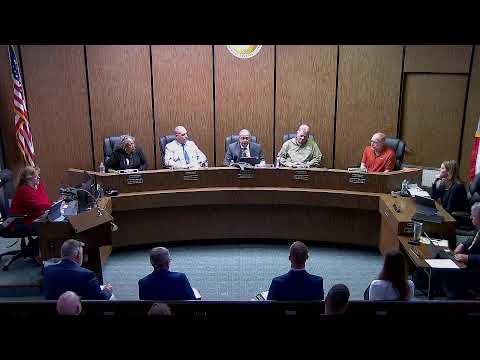
County Attorney Matt Rollerson asked the Board of County Commissioners for direction on a draft ordinance to change how code‑enforcement citations are handled, saying the proposed updates would route citation appeals to the county’s special magistrate and create an effective tool for repeat violators.
Rollerson described the operational intent: issues that create immediate public‑safety concerns or are irreparable would still allow rapid action, but for recurring, minor violations (for example, repeated commercial vehicles parked in residential areas) the new citation process would impose an initial fine (the draft lists $250) and escalate for repeat violations ($500 and higher for subsequent offenses). If a property owner does not request a hearing within the notice period, the citation would be adjudicated and unpaid fines could lead to liens.
Commissioners pressed on implementation: how warnings work, whether staff have capacity to re‑inspect properties on a short cycle, how service and certified mail will be handled, and whether cases would inappropriately return to county court. Rollerson said staff intend a short operational warning (he cited a common three‑day operational window rather than a 30‑day delay) and that certified mail plus posted notice would provide the service necessary for magistrate adjudication.
Several commissioners emphasized the goal is compliance, not punishment: they asked that code‑enforcement staff and the county attorney finalize operational procedures to protect staff safety, ensure consistent use of citations in problem areas (Wheeler Road was cited as an example), and preserve the county’s ability to tie penalties to property liens for enforcement. The board did not vote on the ordinance at the meeting; Rollerson said staff will refine the draft and return for a future advertised hearing.