Get Full Government Meeting Transcripts, Videos, & Alerts Forever!
Get email alerts on the Grading Policy topic
No spam. Unsubscribe anytime.
Talbot County grading committee reports draft hybrid grading model; board told final proposal coming
Summary
A grading-committee update presented to the Talbot County Board of Education described multi‑phase work, cross-district research and a proposed hybrid grading model for secondary grades; the committee will finalize recommendations next week and send a draft to a board work session.
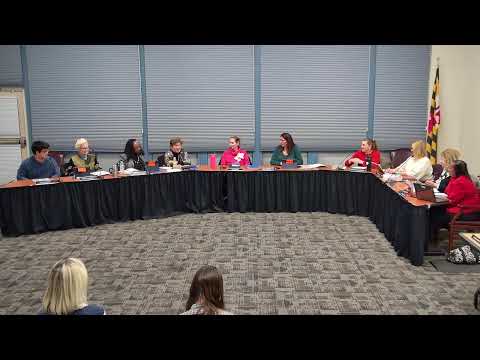
The Talbot County grading committee reported progress on a multi‑phase review of district grading practices and presented a preliminary draft recommendation to the school board on Feb. 11.
Mrs. Warner, who led the presentation, said the committee—composed of teachers, administrators, parents and community members—worked in elementary and secondary subcommittees to review current policy, compare models used in other Maryland districts and analyze local data. The committee considered traditional letter grades, standards‑based grading and competency‑based models and said it had synthesized elements into a proposed hybrid approach for grades 6–12.
"We revisited the models that Joanna talked about, the 4 models, and took the best of each component and joined them into what we called a hybrid model," a committee presenter summarized.
Committee members described their phased process: stakeholder identification, subcommittee meetings, data review and development of a preliminary draft administrative regulation (AR). The group plans to reconvene next week to finalize recommendations, then share the draft with broader stakeholder groups for feedback before sending a final recommendation to the policy committee and the board at a later meeting.
Board members asked procedural and scope questions; the board president emphasized that the district will use a forthcoming work session to "dig in on the policy components," limiting this evening's questions to process and how the committee reached its recommendations.
Next steps: the grading committee will merge subcommittee work, gather stakeholder feedback and return to the board in a work session where members said they expect more in‑depth scrutiny of the proposed policy language, assessment meanings and implementation timelines.