
Fiscal Court advances amendment to Lake Cumberland Tourist Commission ordinance to align with KRS, create rebate incentive
Get AI-powered insights, summaries, and transcripts
Subscribe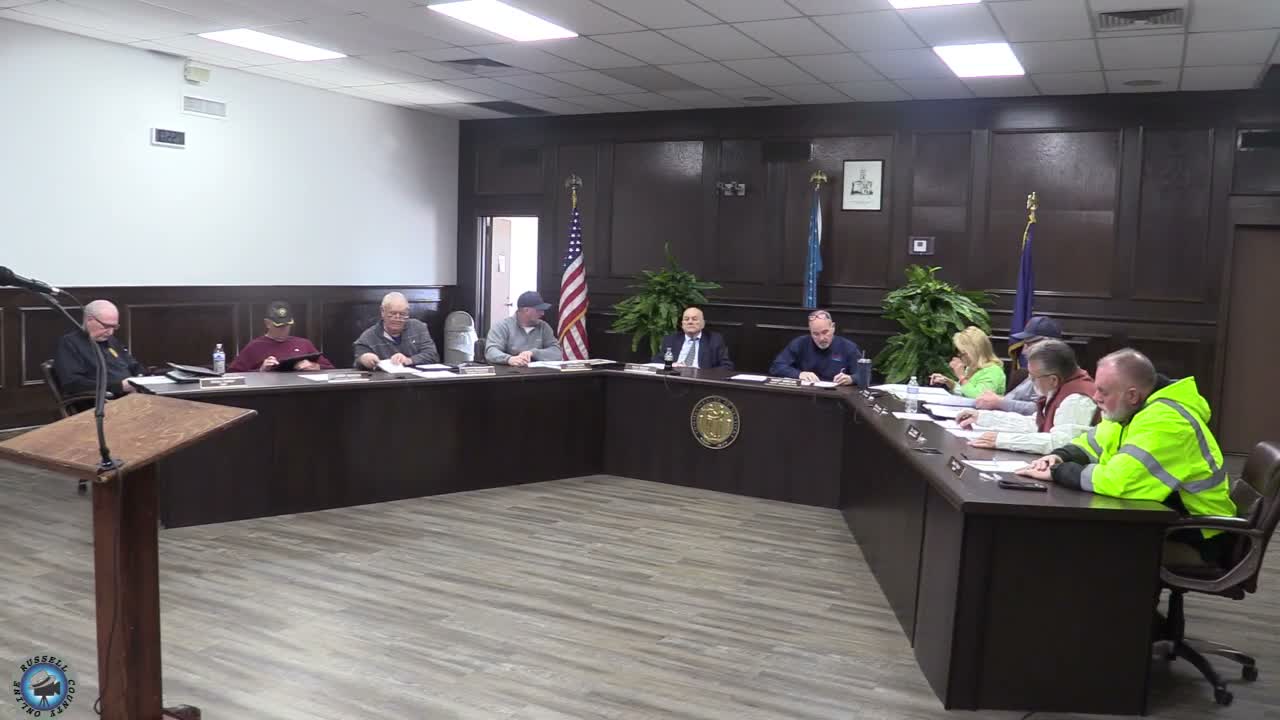
Summary
Russell County fiscal court approved a second reading to amend the Lake Cumberland Tourist Commission ordinance, updating KRS language, replacing 'registration/permit' with 'certificate,' expanding penalty language for late transient-tax returns and authorizing a 1%–3% transient-tax rebate for qualifying lodging developers, to be administered by the commission in consultation with the county attorney.
Russell County fiscal court on its recent meeting advanced and approved a second-reading amendment to the Lake Cumberland Tourist Commission ordinance to more closely match state law and create a transient-tax incentive program.
Speaker 9 read changes that revise Section 3 to align transient-room tax collection language with Kentucky Revised Statutes (KRS) and replace words such as 'registration' and 'permit' with 'certificate.' The amendment also updates penalties for late returns: any return received after the due date 'shall be considered delinquent and assessed as a penalty of the greater of the $100 or 10% of the taxes that are due,' with additional periodic penalties for continued nonpayment.
The ordinance establishes authority for the Lake Cumberland Tourist Commission, in consultation with its executive director and the Russell County attorney, to consider applications from lodging developers seeking a transient tax incentive. The commission may authorize a rebate of 1% to 3% of the collected transient-room tax for qualifying projects after evaluating criteria including minimum square footage, number of guest rooms, projected full- and part-time jobs created and demonstrated tourism benefits. Any approved incentive must be documented in writing and maintained in the commission’s official records.
The court approved the second reading by voice vote after the reading of the highlighted changes; the motion on second reading was made by Magistrate Garner and seconded by Magistrate Quaddell. The amendment requires the commission and county attorney to review any incentive application and reserve the right to deny proposals that do not meet the established criteria.
Why it matters: the amendment both clarifies statutory language and creates a formal path for targeted tax rebates intended to attract lodging development, while specifying documentation and penalties for noncompliance. The court noted implementation will require administrative procedures and continued oversight by the commission and county attorney.
Next steps: the commission will establish an application process, review applications against the stated criteria, and, if approved, will record the rebate agreement in the commission’s official records. The ordinance change is effective per the court’s adoption process and will be administered locally under the authority described in the amendment.