Get AI Briefings, Transcripts & Alerts on Local & National Government Meetings — Forever.
Panel approves pilot grants to help student teachers finish certification and stay in Georgia classrooms
Loading...
Summary
The subcommittee reported HB310 (LC 492630S) favorably after witnesses and lawmakers described a pilot that would offer up to $5,000 for Pell-eligible student teachers and a $2,500 signing grant (pilot cap ~500) aimed at reducing barriers to completion and improving teacher retention in Georgia public schools.
The House Curriculum and Academic Achievement Subcommittee voted to send HB310 (LC 492630S) to the full committee after hearing testimony that unpaid student-teaching semesters prevent many low-income candidates from completing certification.
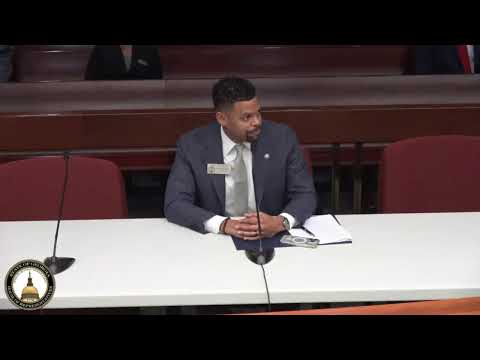
Sponsor testimony cited a statewide teaching vacancy number — "5,358" — and described HB310 as a targeted, capped pilot: up to $5,000 grants to Pell-eligible student teachers during their unpaid student-teaching semester, plus a $2,500 signing grant for those who accept employment and remain at least 30 days. The presenter said the pilot would serve up to 500 student teachers over two to three years, with administration proposed through the Student Finance Commission and the Department of Education for the signing grants.
Committee members raised budget and targeting questions. Madam Pro Tem noted the history of grant programs authorized without funding and asked for clearer direction on appropriations and whether grants should be targeted to shortage fields or geographies. The sponsor responded that the program is modeled on similar programs in other states and that the Student Finance Commission has capacity to administer the first grant; the signing grant would be administered by the Department of Education.
Student speakers and education organizations supported the bill. Solomon Clemens, an aspiring educator at Morehouse College, said unpaid student teaching disproportionately affects first-generation and low-income students: "Unpaid student teaching has disproportionately impacted college students from lower income backgrounds." Testimony from the Georgia Association of Educators and the Professional Association of Georgia Educators described how financial support could help candidates complete certification and improve retention.
After discussion and brief questioning about eligibility (Pell-eligible and in good standing) and concerns about overlap with other scholarships, Representative Carter moved HB310 for a do-pass recommendation. The motion carried by voice vote and the bill was reported to the full committee.
Next steps will include consideration of funding sources, whether to narrow eligibility by subject or geography to address shortage fields, and pilot administration details should the measure be funded.