Subcommittee advances literacy bill to place trained reading coaches in K–3 schools
Loading...
Summary
The House Curriculum and Academic Achievement Subcommittee voted to send HB1193 (LC 492629S) to the full committee after hearing that the bill would require school systems to provide full-day kindergarten and establish a tiered literacy coaching network, statewide screeners and a task force to select high-quality instructional materials.
The House Curriculum and Academic Achievement Subcommittee advanced HB1193 (LC 492629S) on a voice vote, sending the literacy measure to the full committee for further consideration.
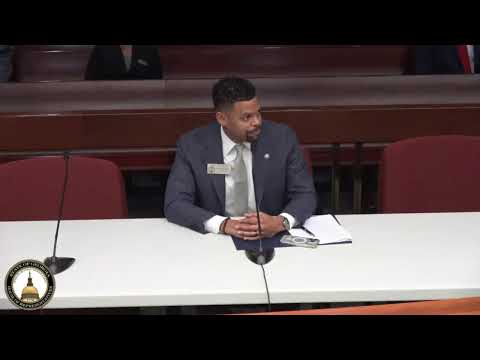
The bill, presented to the subcommittee as a statewide effort to increase reading proficiency, would place a qualified, school-based literacy coach in every public school that serves kindergarten through third grade, establish regional and leadership literacy coach positions, and direct a Georgia Literacy Task Force to select high-quality instructional materials (HQIM) and universal reading screeners. The presenter told the panel, "This is a mission we cannot ignore and a mission we cannot fail," framing the measure as essential to improving long-term student outcomes.
Supporters told the committee the bill aims to standardize instructional resources and provide in-classroom coaching rather than relying solely on out-of-class training. "We are grateful for this legislation that we believe is responsive to feedback that we have provided," said Margaret Ciccarelli of the Professional Association of Georgia Educators, who urged the committee to ensure coaching translates into improved instruction in classrooms. Beth Haynes of Decoding Dyslexia Georgia supported the legislation but emphasized the need for deep, dyslexia-aware training so coaches do not become perceived supervisors: "These coaches need to be deeply trained so that teachers can have confidence in them."
Key provisions explained in the hearing include: a required unified literacy plan for local education agencies, the statewide provision of a selected HQIM at no cost to LEAs, use of universal reading screeners (described by the presenter as diagnostic products rather than additional personnel), and placement and promotion rules that create a placement committee including principal/designee, parent or guardian, and teacher representatives. The presenter estimated roughly 1,350 elementary schools would be in scope and described an FTE-based approach to staffing (full-time coaches for larger schools with proportional allocations for smaller schools and regional tiers to support implementation).
Committee members asked several procedural and operational questions. Representatives pressed the sponsor on whether the bill makes full-day kindergarten mandatory; the presenter confirmed the bill changes the language to require that local systems offer full-day kindergarten (described in committee as a system-level requirement), while retaining the state compulsory attendance age and allowing readiness testing so some children who did not attend kindergarten elsewhere could be placed into first grade based on assessment results. The bill also clarifies DECAL policy on public pre-K enrollment for summer birthdays, the presenter said.
The bill includes reporting requirements for the new literacy roles so the state can track screener data and school-level progress. Representative Howard asked how success for individual literacy coaches would be measured; the presenter and legislative counsel pointed to reporting lines in the bill that allow the Office of Student Achievement and local leaders to review screener data and other performance indicators.
During the public-comment portion, local leaders, parent advocates and teacher groups uniformly supported the bill, citing Gwinnett and Fulton County policy differences that have motivated calls for clearer statutory language on enrollment and placement. Several parents and aspiring teachers urged protections for late-summer birthdays and said parental choice on school start timing should be preserved.
Chairman Chokas moved that the bill be given a "do pass" recommendation. After a recorded voice vote with no opposition noted on the record, the subcommittee forwarded HB1193 to the full committee.
The bill will next be considered by the full committee, where members may debate funding, implementation timelines and targeting of coach positions.