Get Full Government Meeting Transcripts, Videos, & Alerts Forever!
Get email alerts on the Juvenile Justice First Offender topic
No spam. Unsubscribe anytime.
Committee hears HB673 to extend First Offender Act to some juveniles tried as adults; prosecutors seek technical fixes
Summary
HB673 would extend the state’s First Offender Act to certain juveniles (ages 13–16) tried as adults for serious crimes; the committee heard testimony from the bill’s author and multiple legal stakeholders and opted to treat the session as a hearing only so the sponsor can work with prosecutors and advocates on technical language and a substitute.
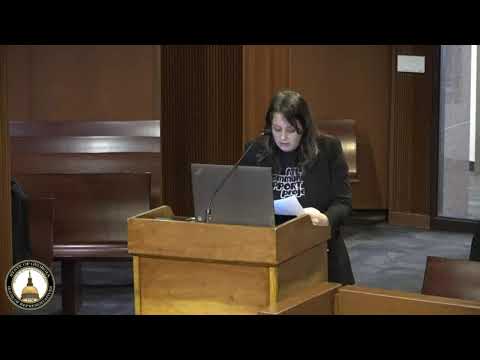
The House Judiciary (Juvenile) Committee held a hearing on HB673, a proposal to extend aspects of Georgia’s First Offender Act to certain people who committed crimes when they were 13–16 years old and were tried as adults. Lawmakers heard testimony from the bill’s author, people personally impacted by juvenile sentencing, district attorneys and defense and reentry organizations before the chair declared the item a hearing only and asked the sponsor to develop a substitute addressing several technical concerns.
Representative Lim, the bill’s sponsor, said HB673 (LC 489002) would allow courts to consider deferring judgment under first-offender procedures for juveniles tried as adults for “serious crimes,” but as written it requires both probation and confinement as part of the sentence before someone could be eligible for first-offender treatment. The sponsor emphasized the proposal would not automatically release young people without accountability but would offer one discretionary path for some first-time offenders to have their adjudication withheld and records sealed if they complete the required terms.
Corey Clevenger, who said he was the bill’s author and served a long sentence for a crime committed at age 13, described his rehabilitation in prison and urged lawmakers to give others a second chance. “Please give Georgia’s children a second chance and vote to pass HB673,” Clevenger said.
District attorneys who testified raised practical and public‑safety concerns. Sarah Japore, district attorney for the West Georgia Judicial Circuit, said she found the bill’s intent positive but identified multiple drafting problems: the text as written sweeps in the full list of offenses in code section 15‑11‑560 (which includes both crimes over which superior court has original jurisdiction and a longer concurrent‑jurisdiction list), does not clearly preserve existing split‑sentence or special‑conditions sentencing regimes, and could allow sealing of records and interactions with offender‑registry provisions in ways that are currently not contemplated. Japore recommended the sponsor and prosecutors work together to refine the language and indicated the DA’s office was prepared to help draft fixes.
Bill Dupee, another district attorney, said he appreciated Clevenger’s story but warned that granting first‑offender treatment for some violent offenses could restore firearm rights after sealing and pose public‑safety risks: “I have literally just put a handgun in their pocket,” he said, describing how consent to retroactive relief can lead to lawful firearm possession. Dupee and other prosecutors asked for careful limits and for the bill to be narrowed or clarified before advancing.
Defense and reentry groups and civil‑rights organizations urged the committee to fix technical language but supported the bill’s goal of expanding relief to people who committed offenses as children. Lucilla Harrell of the Atlanta Community Support Project and Blake Feldman of the Southern Center for Human Rights highlighted barriers older convictions create for housing and employment and cited low recidivism rates for those convicted of the most serious juvenile‑tried offenses in some studies.
Members asked detailed questions about eligibility procedures, whether prosecutorial consent should be required, whether the standard for retroactive relief would be harder or easier than existing adult retroactive relief, and how the statute would interact with sex‑offender registry rules and sealing provisions. The bill’s sponsor and author answered that eligibility would mirror existing first‑offender considerations (rehabilitation, completion of sentence and supervision and risk assessment) and noted the bill, as drafted, included a prosecutorial‑consent clause the sponsor said he was willing to revisit.
After exchanging questions and hearing mixed recommendations from prosecutors and advocates, the chair concluded the committee would treat HB673 as a hearing only and asked Representative Lim to work with district attorneys, criminal‑defense counsel and advocacy organizations on a substitute that addresses the drafting concerns. The hearing ended without a vote.