Hearing only: bill to let pharmacists provide contraceptives advances discussion on training, privacy and coverage
Loading...
Summary
Representative Camp’s HB1138 would let pharmacists dispense self-administered hormonal contraceptives and administer injectables, add insurer coverage for extended supplies, and include liability protections and joint-protocol training; the committee held a hearing and sponsors said minors under 18 would need a prior prescription.
Representative Camp introduced HB1138 (LC461351) as the "increased access to contraceptives act," saying it would allow pharmacists to dispense self-administered hormonal contraceptives (pills, patches) and administer injectable contraceptives, require insurers to cover extended supplies, and amend medical-board rules to limit malpractice exposure for pharmacists acting under the statute.
Representative Clark and other members questioned eligibility and safety: sponsors indicated that the bill requires a prior prescription for people under age 18, and that pharmacists would undergo training and use a checklist of screening questions (family history, clotting history, cancer history) to identify people who should be referred for clinical evaluation. The sponsor noted that the Georgia Composite Medical Board and the State Pharmacy Board would write a joint protocol to operationalize screening and training requirements.
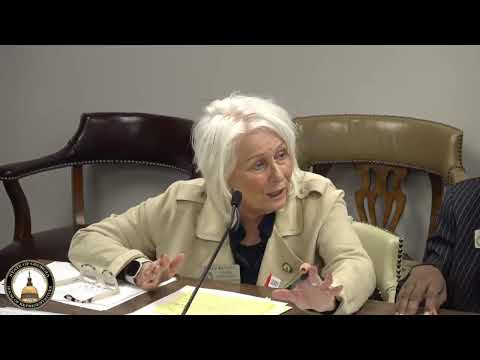
Witnesses included Jesse Wethington (Georgia Association of Health Plans), who said extended supplies could save money, and Dr. Winnie Souffy (OB-GYN, Georgia OB-GYN Society legislative chair), who described access gaps in many Georgia counties and urged support. Sponsor and witnesses said privacy protections are in the substitute and counseling is expected to occur in private consultation areas; compensation and continuing-education requirements for pharmacists remain under discussion.
The chair characterized HB1138 as a hearing only; the sponsor said she would return with details about compensation and continuing education for pharmacists and noted Tennessee materials could inform training resources.