Get Full Government Meeting Transcripts, Videos, & Alerts Forever!
Get email alerts on the Corrections Budget topic
No spam. Unsubscribe anytime.
House appropriations hearing: FY27 corrections budget emphasizes beds, staffing and contraband mitigation
Summary
Lawmakers reviewed the governor's FY27 Department of Corrections recommendations, including modular units to expand bed capacity, health contract increases, additional canine and security‑intelligence staff, and investments in drone detection; the department said federal training and equipment approvals are required before drone mitigation can be used.
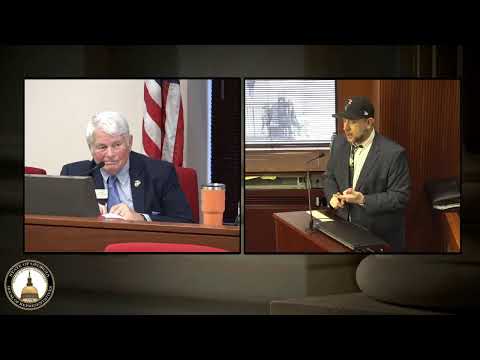
The House Appropriations Committee heard the Department of Corrections' presentation of the governor's fiscal year 2027 recommendations, which prioritize additional bed capacity, health‑care contract increases and technology to reduce contraband.
Committee leadership called Commissioner of the Department of Corrections to outline the package, which includes funding for four modular units that the department said will begin coming online in March 2026 and monthly thereafter; a request to increase per‑diem funding for physical health services to cover outsourced providers; and capital and operations line items for facility repairs and projects.
The department noted multiple targeted items: funding to add 160 beds at Coffee and 103 beds at Wheeler; six additional canine‑handler positions (salary roughly $64,000 each); three additional regional security threat‑group coordinators to address an estimated one‑third of the incarcerated population who are gang‑affiliated; analysts to support managed‑access and drone detection systems; and program expansion at the McRae women's reentry facility, including reentry curricula and parenting classes.
On contraband drones, the department said federal law now allows mitigation but requires a sequence of federal training, approved equipment lists and reporting before state personnel can remove or safely neutralize drones. "We have the mitigation authority. We just gotta make sure that we do it in the right manner and safe manner as well," the Commissioner said, adding the department has not yet certified staff or purchased approved equipment.
Committee members pressed the department on capacity planning and costs. The Commissioner provided a five‑ and ten‑year projection (about 55,000 offenders in five years; roughly 64,000 in 10 years) and said roughly 2,000 beds are currently offline for construction. Legislators asked about repurposing a 100‑bed county jail in Long County; department staff said renovation costs, lease terms and higher per‑diem estimates made that option more expensive than current state rates and therefore not advantageous.
The presentation also covered education and reentry investments. The chair cited committee materials noting that, according to the documents the committee received, each dollar spent on correctional education can reduce recidivism and downstream costs; the department requested almost $1 million for high‑school accreditation efforts to transition staff to teacher pay scales and hire new educators.
What happens next: The Corrections items remain in the committee's FY27 review; members asked for supplemental data on pharmaceuticals, custody staffing by facility and drone mitigation criteria and will consider appropriation decisions in upcoming budget actions.