Get Full Government Meeting Transcripts, Videos, & Alerts Forever!
Get email alerts on the Environment Forestry topic
No spam. Unsubscribe anytime.
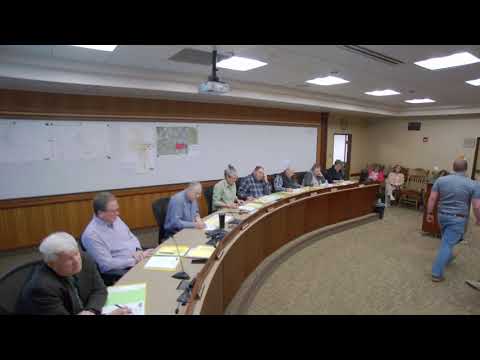
Forest Service briefing: disaster recovery funding, fence repairs and growing timber-volume demands strain resources
Summary
A Forest Service representative told commissioners the Bighorn National Forest has one year into a five-year disaster-funding cycle for recovery work and invasive-species monitoring; timber production has surged from historic plan levels and staffing shortfalls raise sustainability concerns.
A Forest Service representative updated Sheridan County staff on disaster recovery and ongoing forest operations, saying the Bighorn National Forest is in the first year of a five-year hazardous-fuel/disaster funding cycle and that work on fencing, trails and monitoring is underway.
"We have material that is now assured to get to us by June 1 so that we can actually start some major rehab of fencing," the speaker said, noting roughly 44 miles of fence were within the fire perimeter and that many stretches need repair. The agency plans to work with the Sheridan County Conservation District and the Department of Agriculture to leverage flexibilities and get crews on the ground for repairs.
The speaker also described recent timber volumes and the challenge of meeting higher targets. He said the forest plan originally estimated roughly 13,000 CCF as a typical annual suitable volume; recent production has been higher — "probably around 18,000 to 20,000" in recent years, about "26,000" last year, and that the Forest Service now is being asked to produce about "33,000." The speaker warned the landscape and current staffing levels may not sustain that rate for more than a few years.
Staffing and logistics were emphasized as limiting factors. The speaker said timber contractors have asked for extended contract times to accommodate hauling and labor constraints, and that some mills require specific diameters and material types that are not always available on the forest. The Forest Service noted ongoing work with industry partners to resequence or "basket" timber volumes across a broader Northern Wyoming region to meet demand without overburdening any single unit.
Officials also said some environmental analyses will expire in roughly two years and that the agency is preparing smaller, more discrete analysis units (for example, Tung River watershed units) to maintain compliance and provide timely treatments. The representative said partnership with state forestry (specifically Jacob McCarthy in Buffalo) and other local partners remains essential given current staff constraints.
The briefing included updates on visitor facilities and operations and emphasized that additional details on treatments, timelines and environmental analysis will be shared as they are finalized.