Get Full Government Meeting Transcripts, Videos, & Alerts Forever!
Get email alerts on the Workforce Development topic
No spam. Unsubscribe anytime.
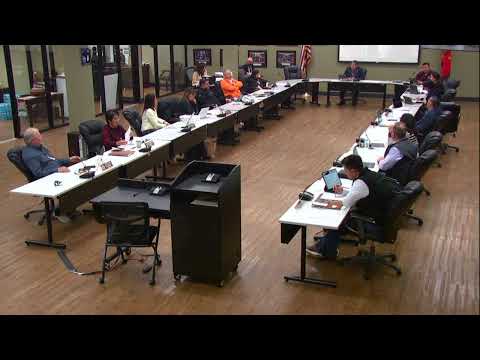
Cherokee Nation council approves $1 million scholarship and $1 million career-readiness funding for health workforce initiative, votes 16–0
Summary
The Cherokee Nation council approved two related measures to support health-care workforce development, including a $1 million scholarship allocation and $1 million for non-degree career training; both measures passed by roll call 16–0.
The Cherokee Nation council voted unanimously to approve two pieces of legislation aimed at expanding the tribe’s health-care workforce. Principal Chief Chuck Hoskin described the measures as part of a coordinated initiative: a $1,000,000 scholarship allocation from the Public Health and Wellness Fund to support higher-education health-focused scholarships, and a $1,000,000 allocation under the Career Readiness Act to fund non-degree health-related career training and place career services spending under statute with enhanced reporting and a three-year planning cycle.
Chief Hoskin told the council the scholarship dollars would enable the higher-education department "to use substantially all of those funds" for health-focused degrees and that some funds could support nursing. He also emphasized youth workforce development and cited programs such as Operation Orange at Oklahoma State University as models for outreach.
On the Career Readiness Act, Councillor Julia Coats moved approval; Councillor Joe Deere seconded. Chief Hoskin said the act would require more robust annual reporting, a three-year plan for career services and remove arbitrary restrictions on who may access career services funding, subject to stated fiscal limits. Both items were recorded as passing by roll call vote, 16–0, and the chair noted that items B and C would be sent to a special rules meeting later the same day for further handling.
The measures are funded from the Public Health and Wellness Fund Act as described during the meeting. The transcript records detailed roll-call votes for both items with 16 affirmative votes and no recorded opposition.