Lifetime Citizen Portal Access — AI Briefings, Alerts & Unlimited Follows
TIDA staff preview developer plan to add up to 2,800 units on Treasure Island; officials stress due diligence
Loading...
Summary
Planning staff briefed the TIDA board on a developer application that would add 1,400–2,800 residential units to the Treasure Island project while preserving the project's stated affordable housing ratios; staff said the submission (filed Jan. 30) begins an interagency due‑diligence process including environmental review, fiscal analysis and infrastructure capacity assessments.
Planning staff told the Treasure Island Development Authority board that the project's master developer submitted a large development application on Jan. 30 proposing to add between 1,400 and 2,800 residential units to the Treasure Island/Yerba Buena Island plan, while maintaining the currently adopted affordable housing requirement.
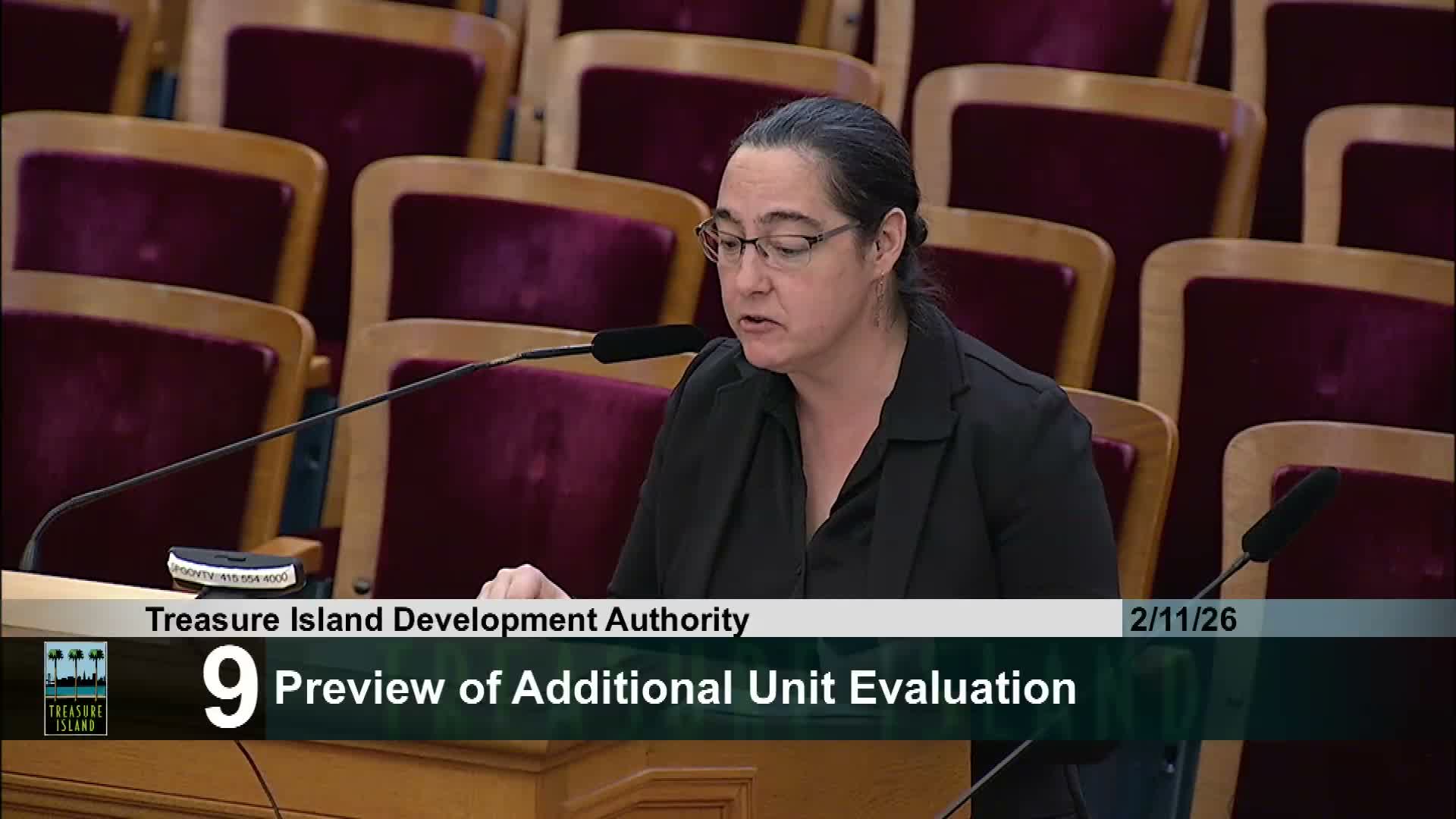
"TICD submitted what's known as a large development project application to the San Francisco Planning Department on January 30," said Allison, Major Sites Principal Planner, describing an application that would add between 1,400 and 2,800 units and retain the adopted 27.2% affordable housing requirement and a 5% inclusionary housing requirement.
Allison mapped how additions would be allocated at the low and high ends of the range, explained that the proposal would not change parcelization or building heights under the adopted plan, and said limited urban-form amendments are under consideration to improve cost efficiency and allow residential guest parking in multifamily buildings.
Staff framed the submission as a response to the city's housing shortfall and to a slower condo market: adding rental units, Allison said, could enable near-term construction while preserving affordable-unit targets. She noted multiple reviews are necessary before any action: the Planning Department will assess application completeness and environmental review needs; TIDA, OEWD and other agencies will collaborate on scope and fiscal impacts; the Controller's Office will evaluate financing; and the City Attorney and outside counsel will assess legal risks.
Several commissioners voiced strong support for pursuing added capacity as a means to meet San Francisco's Regional Housing Needs Allocation (RHNA) obligations and to sustain vertical momentum for neighborhood development. Others asked technical questions about infrastructure capacity, stormwater and wastewater systems, electrical grid constraints tied to all‑electric requirements, and the timing of review. Staff said those technical capacity assessments are part of the due diligence.
Allison and other staff emphasized this briefing begins a process rather than authorizes changes. "This is the beginning of the process. We have a lot of work to do," Allison said; staff committed to returning to the board and the public with results of key analyses before any board action.
What happens next: the Planning Department will review the application for completeness and scope of environmental review; TIDA and partner agencies will assess fiscal, legal and infrastructure implications and brief the board on key findings prior to any approvals.