Lifetime Citizen Portal Access — AI Briefings, Alerts & Unlimited Follows
Public safety leaders and veterans oppose rollback of first-responder tuition waivers
Loading...
Summary
LB1117 would add academic requirements and require federal benefits be spent first for state tuition waivers, and allow institutions to seek partial reimbursement; dozens of police, fire, corrections, veterans and higher-education witnesses warned that changes would undermine recruitment and retention and create funding instability.
Tyler Mahood introduced LB1117 on behalf of Senator Ivo as a package of proposals to address the fiscal pressure created by multiple state-mandated tuition and fee waivers. The bill would require dependents to exhaust federal Department of Veterans Affairs benefits before eligibility for state waivers, impose a 3.0 GPA floor and a 120-credit/5-year limit, and permit institutions to request up to 50% reimbursement subject to available appropriations.
Public-safety leaders, corrections officials, veterans’ representatives and police unions delivered sharply negative testimony. Ken Clary, Bellevue police chief, said the bill "represents a retreat from a promise" and warned shifting to a reimbursement model would place financing uncertainty on officers and their families. Sherry Thomas, deputy chief of the Omaha Police Department, testified the waiver is one of the most powerful recruitment and retention tools the department has used and described large year-over-year increases in applications since the program began.
Multiple veterans’ organizations cautioned that requiring beneficiaries to exhaust federal DEA (Chapter 35) payments first would not substitute for the state waiver, because DEA is generally a monthly living stipend and often does not fully cover tuition and fees. Mark Lakamp of the Nebraska Veterans Council said the combination of federal and state benefits is intended to bridge a significant gap; he noted DEA payments alone are frequently insufficient to cover total annual costs of tuition, fees, room and board at public universities.
University, college and community-college representatives described rising fiscal strains from unfunded waivers and urged a coordinated funding approach. Paul Turman (Nebraska State College System) and University of Nebraska staff said costs have grown quickly and emphasized that shifting reimbursement to annual appropriations could create program instability and shift costs onto other students if appropriations are insufficient.
Many law-enforcement witnesses gave concrete, local examples of the waiver's effect on staffing: Ben Houchin (Lancaster County chief deputy) said 20% of his agency’s officers either used or plan to use the benefit and that the program has influenced retention decisions. Corrections and fire professionals offered similar testimony, asking the committee not to erode the recruitment and retention gains the waivers were designed to produce.
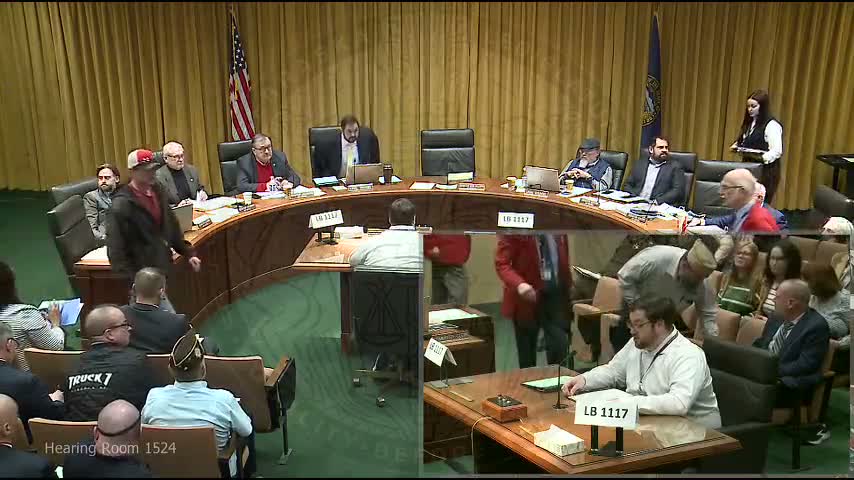
The hearing included a mix of pro, neutral and opponent letters and extensive oral testimony. The committee did not act on LB1117 today; members asked questions of witnesses and heard offers to work on guardrails and funding solutions.