
Nebraska hearing spotlights data-center impacts; sponsor seeks reporting, full-cost rules
Get AI-powered insights, summaries, and transcripts
Subscribe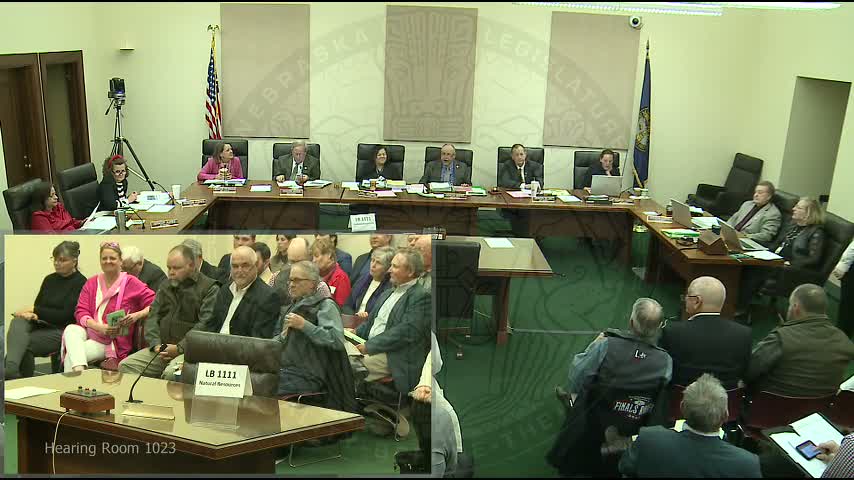
Summary
At a Natural Resources Committee hearing, Senator Michaela Kavanaugh introduced LB1111 to require large data centers to pay the full cost of electric service, provide financial assurance for stranded infrastructure, disclose basic operational data and plan for decommissioning; proponents said the bill is a first step to protect residential ratepayers and track environmental impacts.
Senator Michaela Kavanaugh introduced LB1111 before the Natural Resources Committee seeking basic reporting and consumer-protection requirements for large data centers. Sponsor Makayla Cavanagh said the bill would "protect the economic interest of Nebraskans from potential adverse impacts of large data centers" by requiring facilities to pay the full cost of electric service, provide financial assurance for stranded infrastructure, plan for decommissioning and enter community benefit agreements.
Supporters told the committee they want transparency and guardrails, not a moratorium. Jane Kleeb of BOLD said the group does not oppose data centers but "we are simply here to say that we need some guardrails on data centers," citing statewide changes in commercial electricity sales and diverging rate trends. Ken Winston of the Nebraska Sierra Club urged disclosure of water use, fuel types, greenhouse-gas emissions and local environmental impacts in addition to the bill’s reporting requirements.
Experts and neutral witnesses flagged drafting and technical issues. Tim Trexel, executive director and general counsel for the Nebraska Power Review Board, said the board is neutral on whether the report requirement is mandated but asked the committee to clarify imprecise language — notably the scope of "proposed" facilities — and to ensure the bill does not conflict with existing service-area protections under state law.
Committee members pressed the sponsor on specific mechanics: how utilities handle aid-and-construction contributions, whether the bill effectively requires on-site generation or water reclamation, and how it would align with other state regulatory processes. Cavanagh and committee members said several definitions and thresholds could be amended; she asked to work with stakeholders on clarifications.
No formal action was taken; the hearing record showed substantial public support online and several proponent witnesses in person. The committee closed the LB1111 hearing with the sponsor and stakeholders agreeing to follow-up drafting work and additional technical conversations.