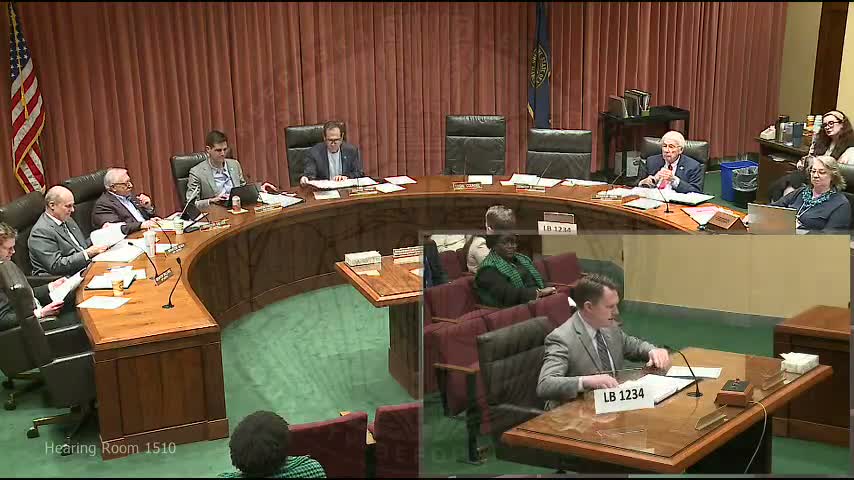
Nebraska committee hears heated debate over licensure for freestanding birth centers
Loading...
Summary
The Health and Human Services Committee heard hours of testimony on LB1234, which would license freestanding birth centers and (with AM2051) authorize certified professional midwives to staff them. Supporters said centers expand low‑risk options and reduce costs; hospitals and medical groups warned of safety, transfer and oversight gaps.
Senator Ben Hansen introduced LB1234 with Amendment 2051 to authorize licensure and accreditation for freestanding birth centers and to allow certified professional midwives (CPMs) and certified nurse midwives (CNMs) to practice at those centers.
Hansen said the bill is modeled on national standards and aims to restore an out‑of‑hospital birth option that vanished in Nebraska: the proposal would require accreditation through the Commission for the Accreditation of Birth Centers and a written transfer plan for emergencies. He told the committee the measure is designed to address workforce shortages and expand rural access to maternity care.
Proponents described personal and published evidence in support. Joy Kathurima of IB Black Girl said freestanding centers provide "a home like environment" and cited studies associating birth‑center care with lower preterm and cesarean rates and higher breastfeeding initiation. Abigail Chadha, a certified professional midwife licensed in Iowa, outlined CPM training routes and said 73% of U.S. birth centers employ CPMs; multiple parents and midwives described long drives to deliver and closures of local birth centers.
Opponents, including the Department of Health and Human Services and medical and hospital groups, urged caution. Dr. Timothy Tesmer, DHHS chief medical officer, said the bill as filed would place freestanding birth centers outside DHHS's usual regulatory framework unless amended, and that the department would lose some rule‑making authority if accreditation alone determined licensing. He also warned the bill lacked mandatory, statewide transfer protocols and did not require collaborative agreements that DHHS views as important for timely emergency transfers.
Hospital and physician witnesses raised similar concerns. Robert Wergin of the Nebraska Medical Association said LB1234 did not set required exclusion criteria — such as prior cesarean, multiple gestation or malpresentation — or require centers to be within a specified safe proximity to hospital surgical and neonatal resources. Troy Bruntz, a rural hospital CEO, warned that freestanding centers in low‑volume rural communities might be financially non‑viable and could destabilize existing rural obstetric services.
Senator Hansen and several witnesses said AM2051, filed shortly before the hearing, addressed many regulatory issues by integrating birth centers into the Health Care Facility Licensure Act, adding accreditation, and clarifying transfer and inspection authority. Hansen said he was willing to work with DHHS, ACOG and hospital groups on data reporting, transfer protocols and liability questions.
No final vote was taken. The committee concluded public testimony and indicated there is active discussion about amendments to clarify regulatory oversight, transfer protocols, reporting and liability protections before the bill would move forward.