Nebraska committee hears resolution urging federal pilot to study hyperbaric oxygen therapy for veterans with TBI and PTSD
Loading...
Summary
A legislative resolution asking Nebraska's congressional delegation to support a federal HBOT pilot for veterans (H.R. 3649) was presented and received proponent testimony and expert caution that further research protocols are needed; the committee recorded two proponents and took no vote.
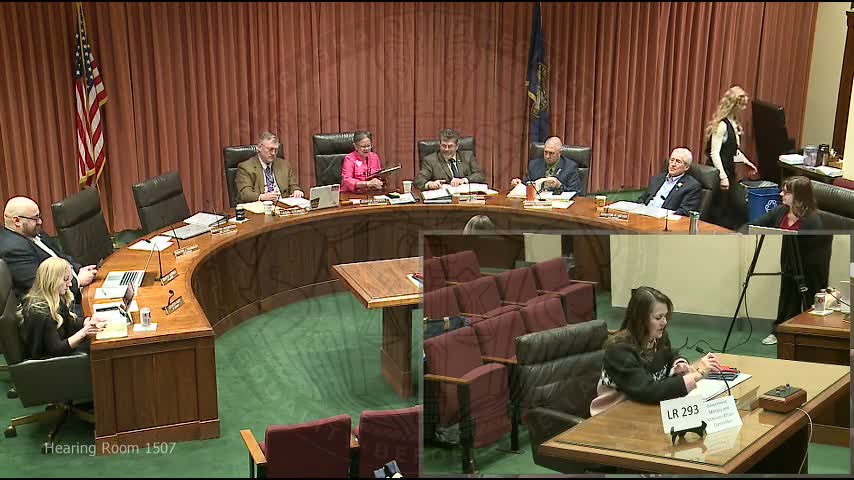
Senator Kathleen Kauth of Legislative District 31 asked the Government, Military and Veterans Affairs Committee to submit LR293 to Nebraska's congressional delegation, urging support for the Veterans National Traumatic Brain Injury Treatment Act (H.R. 3649), which would establish a federal pilot program providing hyperbaric oxygen therapy (HBOT) to veterans with traumatic brain injury (TBI) or post-traumatic stress disorder (PTSD).
Kauth said HBOT is FDA-approved for certain conditions and that LR293 would encourage federal action and eventual FDA consideration for TBI and PTSD. "The goal is to get the federal government to move on their house resolution for the pilot program with the ultimate goal of asking the FDA to approve HBOT for treatment for TBI and PTSD," she said.
Retired Senior Master Sergeant Dale Lutzen, testifying as a proponent, described HBOT as an option veterans have sought and said, "Currently, there are 28 published clinical trials demonstrating HBOT safety and its ability to improve cognitive function, sleep, mood regulation, and overall quality of life in patients with traumatic brain injury." He added that several states have enacted or introduced HBOT-related measures and urged Nebraska to join the movement.
Dr. Jeffrey Cooper, a board-certified emergency physician and hyperbaric medicine director at Nebraska Medicine and the University of Nebraska Medical Center, testified neutral and emphasized caution. "Both PTSD and traumatic brain injury may benefit from hyperbaric oxygen therapy, but that this needs to be done within a research protocol as it's still an emerging and somewhat experimental therapy," Cooper said. He summarized Department of Defense trials as too small to show clear efficacy, noted some international work with larger doses and longer courses, and warned about safety lapses in unregulated centers.
Cooper recommended restricting eligible devices to FDA‑approved chambers meeting safety standards, requiring physician supervision with appropriate training, and conducting treatment under IRB‑approved, transparent, peer‑reviewed research protocols to collect efficacy and safety data. He said these caveats are not currently incorporated in the federal bill and suggested amendments at that level to strengthen protections.
Chair Senator Rita Sanders recorded two proponents, zero opponents, and zero neutrals on the hearing record and closed the LR293 hearing; no committee vote or formal action was taken during this session.