
DED seeks BIA boost, proposes transfers; housing groups warn against shifting workforce housing funds
Get AI-powered insights, summaries, and transcripts
Subscribe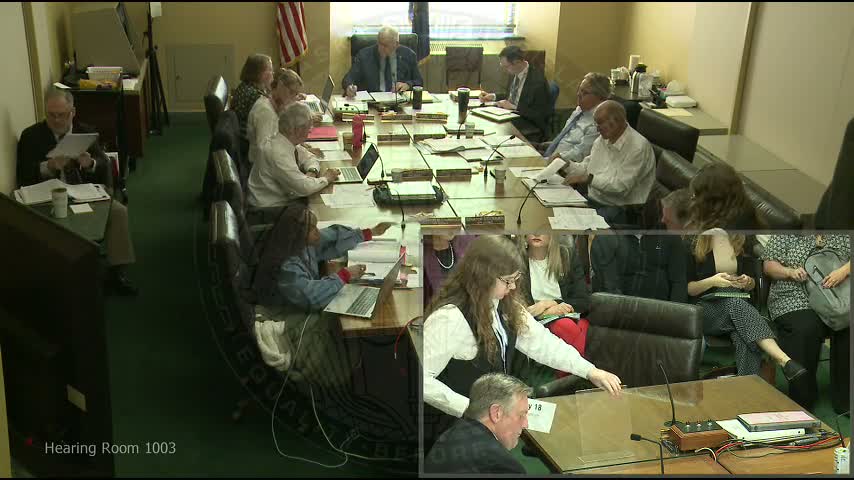
Summary
The Department of Economic Development proposed increasing Business Innovation Act funding and transferring idle contingency funds back to the general fund; housing stakeholders warned that moving unobligated balances from workforce housing programs into the Affordable Housing Trust Fund would undermine revolving workforce funds and local matching requirements.
Maureen Larson, director of the Department of Economic Development, told the Appropriations Committee the governor recommends increasing appropriations for the Nebraska Business Innovation Act (BIA) from roughly $12 million to $15 million and moving certain funding sources from general funds to cash funds. Larson also described recommendations to transfer idle balances in the economic recovery contingency fund back to the general fund and to consolidate program budgets for efficiency.
Larson cited the 2025 BIA impact report: $11.52 of private capital per $1 of state investment and other favorable ratios, and described DED’s management of an extensive set of ARPA/NSOR grantees. She told senators the department is monitoring roughly 126 grantees and projects and projected that about 4% (roughly $18 million cited in testimony as part of a larger reappropriation discussion) may not be spent due to timing and eligibility issues.
Housing advocates and developers opposed language in budget bills (LB 10‑71/10‑72) that would transfer unobligated balances from the Middle Income Workforce Housing Fund and Rural Workforce Housing Fund into the Affordable Housing Trust Fund and urged preserving the revolving nature and local‑match features of the workforce funds. Witnesses from the Nebraska Housing Developers Association, SPARK (a statewide nonprofit), and local developer academy graduates said the workforce funds enable projects in smaller communities that rely on matching dollars and revolving loans; they supported bills to restore or extend workforce funds and urged the committee to reject transfer provisions.
Economic development districts and their association testified on LB 10‑30 to restore $700,000 in departmental support cut in the governor’s recommended budget, describing grant outcomes and projects that leveraged state investment into housing, water, infrastructure and job creation across rural Nebraska.
Committee members asked about DED staffing (FTEs rose from 63 in 2020 to 86.25 currently, peak ~114 in 2025), program wind‑downs (statutory end dates in 2027 for some ARPA‑era programs), and grant monitoring practices. Larson said the department advances funds and monitors reporting and is actively renegotiating timelines with grantees to maximize spenddown where feasible.
Public testimony was extensive and split along policy lines: DED emphasized investment returns and program consolidation; housing and development stakeholders urged protection of dedicated workforce housing funds and reinstatement of EDD funding.