Get Full Government Meeting Transcripts, Videos, & Alerts Forever!
Get email alerts on the Dynamic Pricing topic
No spam. Unsubscribe anytime.
Nebraska Legislature narrows dynamic-pricing ban during declared emergencies; bill advances
Summary
After amendments, the Legislature advanced LB771, limiting bans on dynamic pricing by ride-hailing and similar companies to counties actually under a declared state of emergency and adding a default 7-day restriction unless extended by the governor.
Senators advanced LB771 on a 35-0 recorded vote after adopting amendments that narrow a proposed statewide ban on dynamic pricing during gubernatorial states of emergency.
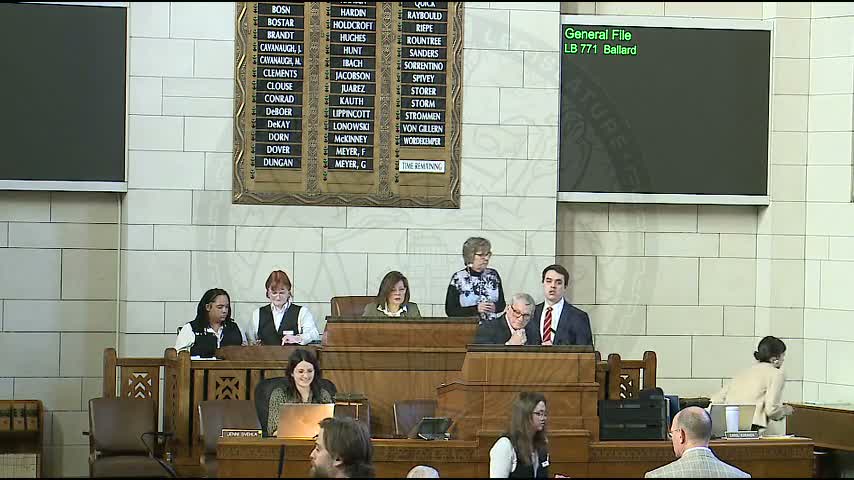
The bill, sponsored by Senator Ballard, would change current law governing transportation network companies’ use of dynamic pricing during states of emergency. Ballard said the measure flips the current automatic statewide ban to an automatic opt-out and asked colleagues for a green vote to send the bill to select file.
Senator Fredricksen introduced a floor amendment that drew from language provided by the Nebraska Emergency Management Agency (NEMA). The amendment limits the consumer-protection ban so it applies only in the counties or jurisdictions that are actually included in a declared state of emergency and sets a 7-day default ban period. The amendment allows the governor discretion to extend or shorten that period depending on the emergency. “This bans dynamic pricing for a 7 day period, during a state of emergency in the specified county… the governor has the discretion to either increase that time period, or decrease that time period contingent upon what the actual emergency is,” Fredricksen said.
Senator Ballard supported the change, saying it maintains consumer protections while reducing administrative burdens for state agencies. The amendment was adopted unanimously and the bill advanced.
Several senators urged caution about the broader implications of algorithmic pricing. Senator Dungan noted research and allegations that some apps use personal data — such as device battery life or location — to tailor prices and said the Legislature should grapple with consumer-protection and data-privacy implications of surge-pricing algorithms.
An earlier amendment — an emergency clause — was adopted (32-2) to set an operative timing provision for the bill. The floor amendment to limit scope and set the 7-day default was adopted by voice and recorded as unanimous. The Legislature then voted to advance LB771 to select file.
The next formal step is select-file consideration, where senators may offer additional amendments before final passage.