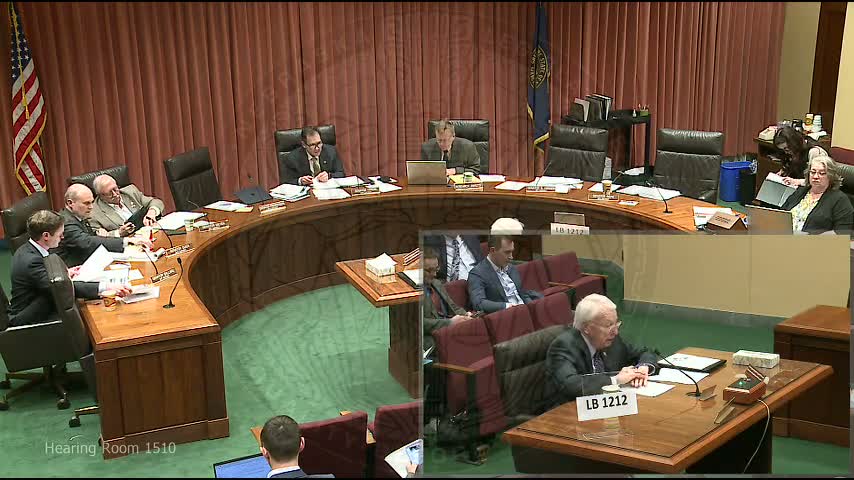
Panel debates pathway for internationally trained physicians to practice in rural Nebraska
Loading...
Summary
LB1212 would create a supervised licensure pathway for internationally trained physicians (ITPs) to practice in Nebraska shortage areas, progressing from a limited supervised license to a restricted geographic license and eventually full licensure; supporters said it addresses rural shortages, while the Board of Medicine and medical associations urged stronger verification, recent practice requirements and clearer safeguards.
Senator Merv Riepe opened LB1212, arguing Nebraska needs additional tools to address physician shortages in rural and underserved counties and proposing a three‑stage pathway for internationally trained physicians who hold equivalent medical degrees and have passed USMLE steps to gain licensure after supervised in‑state practice.
Michael Zimmer of World Education Services and multiple industry and community witnesses said similar pathways have been enacted in more than 20 states and that the bill includes safeguards such as employer screening, six‑month supervisory evaluations and a geographic restriction for the restricted license designed to focus practitioners on shortage areas. "The model creates a supervised practice under a limited license followed by a restricted license requiring practice in a shortage area," Zimmer said.
Opponents including the Nebraska Board of Medicine and the Nebraska Medical Association urged revisions. Dr. Jodann Hedrick, representing the Board, said the bill should require clearer verification of in‑country specialty certification, a requirement for recent clinical practice, and suggested replacing terms that carry disciplinary connotations with "provisional license." He emphasized the board’s mission of public safety and offered to work with the sponsor to tighten standards.
Supporters — including Nebraska Farmers Union, the Latino Economic Development Council, Career Ladder and health‑care employers — argued the pathway will help rural hospitals recruit physicians who share language and culture with local populations. Several witnesses urged the board and legislature to adopt precise language on immigration eligibility and suggested referencing federal immigration rules for clarity.
The committee heard extensive questions on credentialing, malpractice insurance availability, scope of practice during supervised periods, and mechanisms to ensure candidates’ training is "substantially similar" to ACGME programs. No committee vote was taken at the hearing.