
Rural sheriffs and chiefs back LB784 to reduce required annual training hours and ease residency rule
Get AI-powered insights, summaries, and transcripts
Subscribe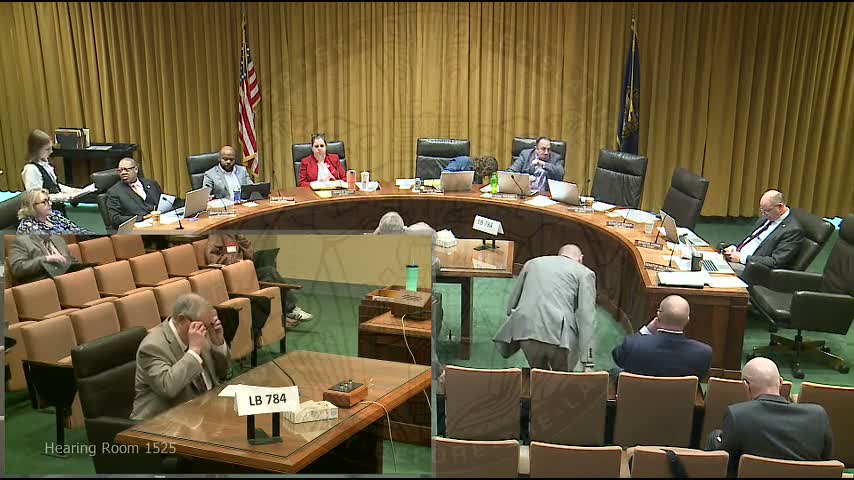
Summary
LB784 would reduce mandatory annual continuing‑education hours for officers from 32 to 24, allow sheriffs in counties without large cities to reside in adjoining counties, and modernize sheriff uniform rules; rural chiefs said the bill eases overtime and staffing burdens, while some senators urged caution on reducing frequency for de‑escalation and implicit‑bias training.
LINCOLN — Law‑enforcement leaders and county officials urged the Judiciary Committee to advance LB784, a package of changes that would lower mandated annual continuing education for officers from 32 to 24 hours, allow certain sheriffs to live in adjoining counties, and update sheriff uniform standards.
Sen. Bob Holstrom, sponsor of multiple bills including LB784 and other public‑safety measures, said the 32‑hour requirement enacted in 2021 has imposed staffing and budget pressures on small, rural agencies that struggle to send officers to centralized training without compromising patrol coverage. "From what I am hearing in my legislative district and across much of the state, the 32‑hour continuing education requirement is negatively impacting many rural law enforcement agencies," Holstrom said.
Sheriffs and police chiefs from small towns described overtime and travel costs: one sheriff said compliance increased his department’s overtime by roughly $30,000. Several proponents said spacing certain mandated topics — de‑escalation, officer wellness, anti‑bias training — on a three‑year cycle would provide flexibility while preserving coverage of core topics.
Opponents and some committee members pressed for more data on whether reduced frequency would harm training quality, and suggested alternative steps such as regional training grants, modular curricula, or varied content to keep material fresh. Questions also covered the conditional‑officer framework from earlier reforms and whether the bill would reintroduce risks the 32‑hour standard was intended to address.
Holstrom said the bill targets rural staffing and budget strain and that community colleges and regional providers are exploring expanded in‑state training options. The committee did not take final action and invited technical follow‑up on program design and funding options.