Nebraska panel hears bill to tighten burn‑permit penalties and let fire departments recover response costs
Loading...
Summary
Sen. Dan Lonowski told the Judiciary Committee LB897 would raise the misdemeanor class for unlawful open burning and let local fire departments recover response costs via a civil special assessment; proponents said the change targets intentional permitless burning while maintaining exemptions for prescribed or accidental fires.
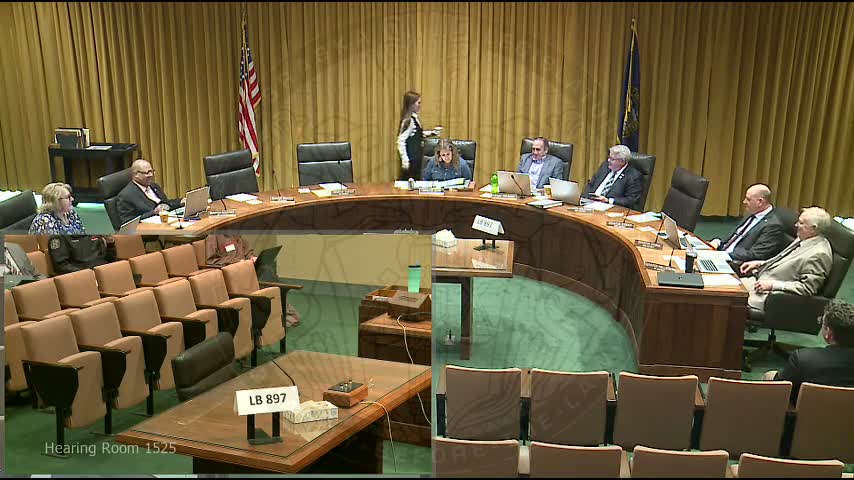
LINCOLN — The Judiciary Committee heard testimony on LB897, a bill introduced by Sen. Dan Lonowski to update Nebraska’s burn‑permit law and allow fire departments to recover the costs of responding to fires that began in violation of the statewide ban.
Lonowski told the committee LB897 raises the classification for violating Nebraska Revised Statute section 81‑520.01 and, “More importantly, LB897 provides that a fire department responding to a fire that resulted from a violation of the burn permit may recover the cost of responding to that fire.” He said the bill was filed on behalf of the Nebraska State Volunteer Firefighters Association and the Nebraska Fire Chiefs Association.
The bill would change the criminal classification for intentional open‑burn violations and create a civil mechanism for municipalities and rural fire districts to assess fees against property owners who burn in disregard of burn permits. Lonowski said he offered AM2024 to add statutory sections clarifying that those assessments are civil special assessments — not criminal restitution — and may be recorded with the register of deeds if unpaid.
Proponents described local examples they said demonstrate the need for stronger deterrents. Kenny Krause, with the Nebraska State Volunteer Firefighters Association, told the committee some landowners repeatedly burn without permits and that county attorneys rarely pursue prosecution under the current statute. Ryan McIntosh, who testified for the Nebraska Fire Chiefs Association, cited the 2024 What Betty’s Way fire (about 69,810 acres burned) and said departments already use Nebraska Emergency Management Agency guidelines to estimate response costs.
Supporters emphasized exemptions: testimony clarified LB897 would not penalize prescribed burns conducted under an approved plan, accidental fires, or permitted burns that get out of control due to unforeseen circumstances.
Committee members focused on implementation details: how municipalities and fire districts would structure fees, notice and appeal processes for special assessments, whether permits can be obtained online, and how to ensure the measure does not discourage residents from obtaining permits. Proponents said local fire chiefs retain discretion over permit issuance, that many departments already post permit details publicly, and that AM2024 specifies assessment procedures similar to existing municipal special assessments.
No formal action was taken; Lonowski asked the committee to advance the bill to general file with AM2024.
The committee’s next scheduled meeting will set deadlines for amendments and committee work on the bill.