Nebraska Supreme Court warns fee swap would risk services as committee weighs LB1228
Loading...
Summary
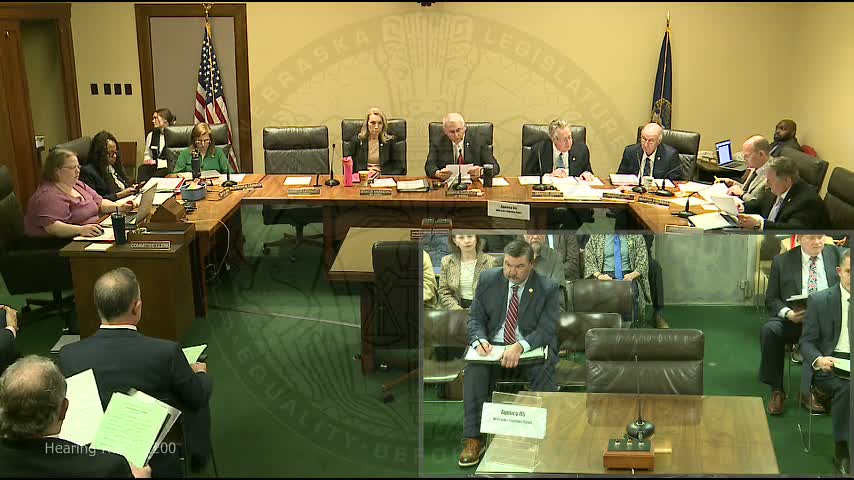
Chief Justice Jeffrey Funk told the Appropriations Committee the Judicial Branch can meet obligations under the committee’s preliminary recommendations but warned a governor‑proposed swap to fund courts with new filing fees (LB1228) is unstable revenue and could force cuts to problem‑solving courts, probation services and transitional living.
Chief Justice Jeffrey Funk told the Nebraska Legislature’s Appropriations Committee that the judicial branch can maintain current court and probation services under the committee’s preliminary budget recommendation but faces two growing pressures: an 18.5% employer premium increase for health insurance and aging AS/400 hardware that supports the state’s Justice case‑management system. He said replacing the system — “Justice 2” — will likely cost $60 million to $75 million and require multiple funding sources.
Funk said the committee’s preliminary recommendations allow the branch to avoid immediate layoffs or court closures by drawing down judicial cash funds, tightening probation rehabilitative eligibility and reviewing accounts. “The scenario with the least impact on the courts and probation is the committee’s preliminary recommendation,” he said.
The hearing focused heavily on LB1228, a bill that would offset general‑fund reductions by raising new court filing fees. John Gerard, president of the Nebraska State Bar Association, testified the bar strongly prefers general‑fund support for courts and warned that shifting roughly $11 million to fees would create barriers for low‑income litigants and put programs at risk. “For many Nebraskans, especially low‑income families, court filing fees are a real barrier to access,” Gerard said.
Corey Steele, state court administrator, told senators the fee increases proposed in LB1228 would be waivable. He explained the waiver process requires a financial affidavit and estimated that 5%–10% of proposed new fees would likely be waived. Steele cautioned, however, that fee revenue is inherently volatile and said general funds are the most stable way to undergird court operations.
Committee members pressed for specifics about which programs would be cut if fees do not produce the projected revenue. Funk said the newest problem‑solving courts and probation rehabilitative services would be first to be reduced under deeper general‑fund shortfalls. He emphasized the demonstrated effectiveness of those programs in reducing recidivism and long‑term incarceration costs.
The committee did not take a vote during the hearing. The next procedural steps include continued deliberation on the committee’s preliminary recommendations and the Legislature’s separate consideration of LB1228.