
Bill would limit statewide surge-pricing bans during emergencies; senators debate consumer protections
Get AI-powered insights, summaries, and transcripts
Subscribe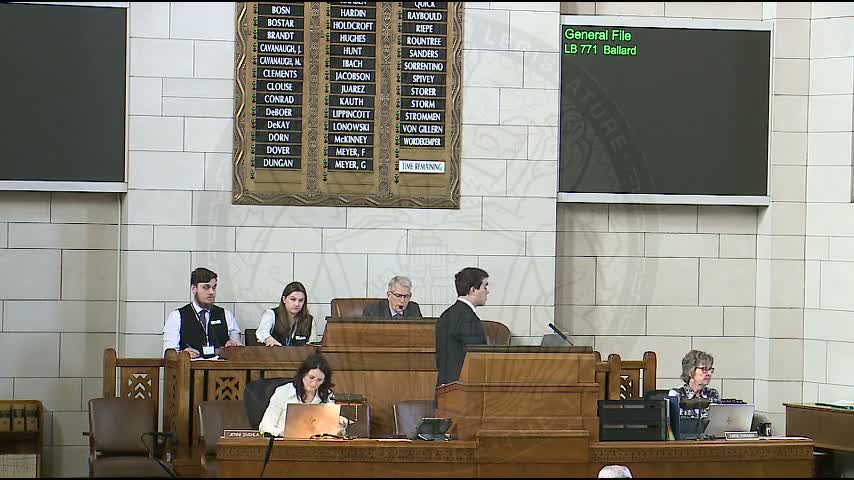
Summary
LB771 would allow dynamic pricing (surge pricing) to continue statewide during a governor-declared emergency unless the governor specifically prohibits it for an affected area. Supporters say the bill corrects overbroad automatic bans; opponents warned about consumer-protection issues and urged county-specific or time-limited approaches.
Senator Ballard introduced LB771 to change how Nebraska treats dynamic (surge) pricing by allowing transportation-network companies and similar services to use dynamic pricing statewide during a declared state of emergency unless the governor issues an order prohibiting it in particular affected areas.
Ballard said the current law—created during the COVID emergency—automatically suspends dynamic pricing statewide, which can be unnecessary where the emergency is geographically limited. "This bill would automatically allow dynamic pricing to continue across the state even during a state of emergency unless the governor bans dynamic pricing in the emergency area," he said.
Opponents including Senator Duncan and Senator Dungan warned that algorithmic dynamic pricing raises consumer-protection issues beyond ride-hailing, citing examples where prices change based on a user's device, location, or profile. Senator Dungan referenced investigations and settlements (including a multi-state action against a major retailer) to show how app-based pricing can disadvantage consumers. Senator Frederickson expressed concern about removing an automatic statewide safeguard, suggesting instead a county-limited approach or narrowly tailored executive orders.
Proponents said the governor would retain the authority to prohibit dynamic pricing for an emergency area and could use executive orders for time-limited, targeted restrictions rather than a months-long statewide ban.
The bill drew floor debate and prompted referrals and discussion in committees focused on banking, commerce and insurance and technology issues; further hearings and committee consideration were expected. The transcript shows a substantive policy exchange about balancing driver earnings, consumer protection and the practicalities of emergency response.