Get Full Government Meeting Transcripts, Videos, & Alerts Forever!
Get email alerts on the Caller Id Spoofing topic
No spam. Unsubscribe anytime.
Banks and law‑enforcement press for telecom duty to block spoofed calls; carriers warn of technical limits
Summary
Sen. Tanya Storer's LB1082 would impose an affirmative duty on telecommunications providers to take reasonable steps to protect subscribers from unauthenticated calls and texts. Banks, law enforcement and consumer groups urged action; rural and national carriers warned the bill as drafted outpaces current STIR/SHAKEN and legacy network capabilities.
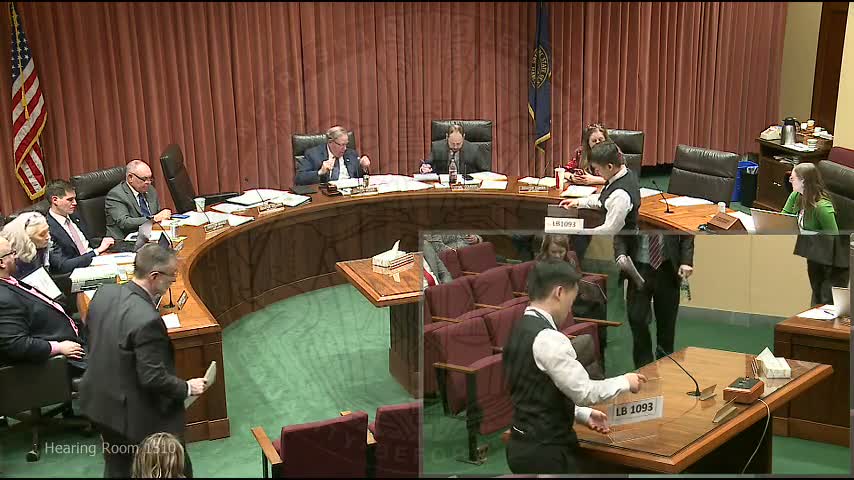
Sen. Tanya Storer opened the LB1082 hearing by framing caller‑ID spoofing as a major consumer‑fraud problem that begins upstream in telephone networks and can defeat bank and institutional protections. "This legislation requires telecommunications providers to take a reason to take reasonable steps to protect their subscribers from unwanted calls or text messages originating from unauthenticated phone numbers," Storer said, describing the bill as part of a broader "fraud‑free Nebraska" package.
Banking and consumer advocates gave the bill strong support. Paul Bender with the American Bankers Association and other bank witnesses said fraud‑losses are large and growing and argued telecoms must do more to prevent impersonation calls. "The current system validates and controls bad telecom behavior is broken," Bender said, urging mandatory accountability to stop shell operators that enable mass spoofed calls.
Law enforcement and victims’ advocates supplied vivid concrete examples of losses, from individual retirees to multi‑state smishing and warrant scams. A Douglas County investigator described cases that cost victims tens to hundreds of thousands of dollars and said systemic fixes are needed beyond public education.
Telecommunications companies — including rural carriers, regional providers and national incumbents — opposed the bill as drafted. They warned a state‑level duty to "protect" could require blocking unauthenticated traffic in ways that unintentionally cut legitimate calls (emergency notifications, healthcare reminders, short codes and some international calls), particularly on networks that still include legacy TDM and tandem switches where STIR/SHAKEN attestation is not preserved end‑to‑end. Pat McElroy (rural carrier coalition) and Allo Communications’ counsel Andrew Vinton urged working through federal frameworks and proposed pilot programs with the Industry Traceback Group (ITG) to scale mitigation capable of including regional banks.
Technical witnesses described how the trace‑back process (ITG/US Telecom) can identify abusive originators and that many mitigation efforts are already in place, but also said shell operators can reincarnate rapidly and often originate calls outside U.S. jurisdiction, complicating enforcement.
Sen. Storer closed by stressing the bill is intentionally concise — it creates a duty to act, not a prescriptive technical mandate or private cause of action — and said she is open to amendments and pilot projects with stakeholders. Telecoms urged careful drafting of safe harbors and recognition of network realities before any statutory duty is imposed.
What’s next: Committee members asked for clarifications and signaled the need for stakeholder negotiation; the sponsor and industry described pilot proposals and technical coordination as possible paths forward.