Sen. Dover seeks narrower land‑bank sales rules to push vacant lots back to builders
Loading...
Summary
Sen. Robert Dover told the Urban Affairs Committee LB 8 11 would expand municipal land banks statewide and add an amendment requiring land banks to offer lots first to private builders (90‑day priority for those committing to start within one year, then a broader two‑year offer window), with a one‑time six‑month extension for extreme circumstances.
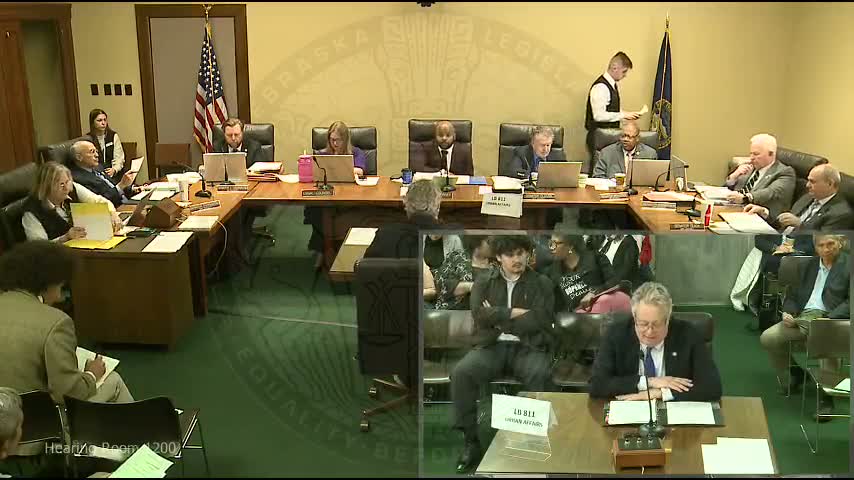
Sen. Robert Dover (District 19) introduced LB 8 11 to expand Nebraska’s Municipal Land Bank Act so smaller cities and towns can form land banks to address vacant, abandoned, and tax‑delinquent properties. In his opening, Dover said the bill ‘‘is a targeted update to the Nebraska Municipal Land Bank Act intended to expand access to land banks and make this proven redevelopment tool available to more communities across Nebraska.’'
Dover pushed an amendment designed to prevent lots from being sold and then left vacant. Under his amendment, land banks would be required to offer property first to private builders: an initial 90‑day priority period reserved for developers who agree to begin construction within one year, followed by offers to builders who commit to beginning construction within two years. Dover also said the amendment allows a one‑time six‑month extension for extreme circumstances such as weather delays.
Supporters testified that land banks provide a practical tool for returning problematic properties to productive use. Connor Herbert of the Nebraska Commission on African American Affairs said the commission ‘‘supports LB 8 11’’ and pointed to vacant and blighted housing as drains on neighborhoods. The League of Nebraska Municipalities’ Christy Abraham supported expanding access for smaller communities but urged the committee to keep sale and advertising detail in local policy rather than embed extensive procedures in statute: ‘‘we would be very willing to have some language that says the land bank must have a policy,’’ she said.
Deana Waloca, real estate counsel for the Omaha Municipal Land Bank, testified in a neutral capacity and urged caution on the amendment. She described Omaha’s decade of experience and said the local land‑bank board uses policy levers and grant conditions—some tied to ARPA and state grants—to require affordable housing or ‘‘shovel ready’’ construction on particular lots. Waloca warned that strict statutory sale requirements can hamstring land banks that rely on local flexibility.
Committee members questioned how land banks are initially funded (grants, philanthropy, local contributions), how the proposed timeframes would be enforced, and whether small towns could find builders willing to commit to start dates. Dover said land banks have recapture authority to buy back property at the original purchase price if buyers fail to commence construction, and argued his amendment balances giving private builders first opportunity while allowing the land bank to act after two years if redevelopment does not occur.
The committee took testimony from proponents and neutral witnesses and discussed language adjustments. Dover said he looked forward to working with stakeholders on amendment wording.
The committee did not take a vote on LB 8 11 at the hearing; the bill was left for further consideration and amendment.