
Committee hears bill to let gap assistance and SNAP E&T work together
Get AI-powered insights, summaries, and transcripts
Sign Up Free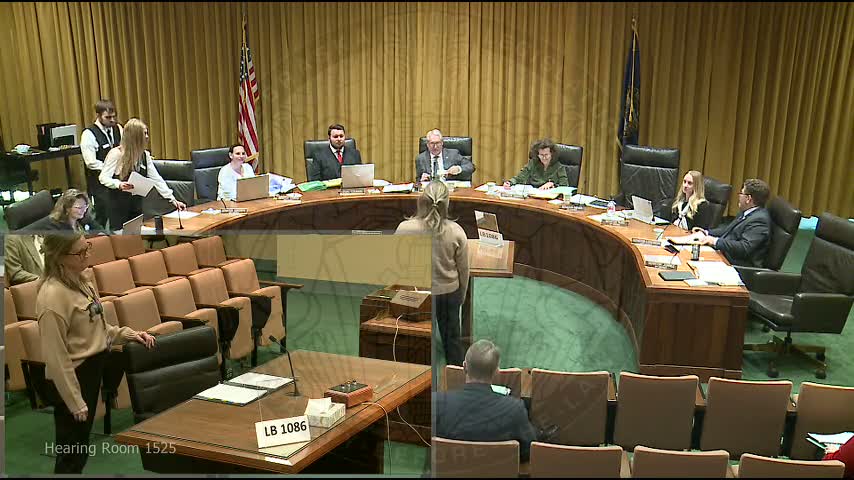
Summary
LB 10-86 would clarify state law so the Community College Gap Assistance Program (GAP) can be coordinated with SNAP Employment & Training (SNAP E&T) and workforce Pell, allowing complementary supports to cover tuition and wraparound services without disqualifying students.
Senator Robert Dover (through legislative aide Whitney Nolan) opened LB 10-86 as a narrowly tailored clarification to remove an unintended statutory barrier that prevented community colleges from coordinating GAP assistance and SNAP Employment & Training (SNAP E&T) benefits. Testimony from community-college officials, the Coordinating Commission and Department of Health and Human Services explained that SNAP E&T provides supportive services (transportation, childcare, work-related expenses) while GAP covers tuition, books and program supplies. Under current statutory language, receipt of certain public benefits could be incorrectly treated as "other available funding" and disqualify students from GAP awards.
Emily Duncan (Northeast Community College) and Tammy Green (Metro Community College) said LB 10-86 would permit colleges to draw down federal matching dollars under SNAP E&T while preserving GAP as a state workforce-development tool. Mike Baumgartner (Coordinating Commission) explained the change was timely given the new workforce Pell authority at the federal level, which prorates Pell grants for short-term programs and could leave state GAP funds necessary to cover remaining costs. He gave examples where workforce Pell would not fully cover expensive GAP programs and said the bill would allow Pell first with gap awards to meet remaining eligible costs.
Health and Human Services, community college staff, and workforce advocates urged the committee to advance the bill as a way to maximize federal resources, increase student supports and speed completion of high‑demand training. No formal opposition testimony was recorded during the hearing; proponents emphasized the bill creates no new program or state appropriation and aligns Nebraska statute with federal SNAP E&T rules.