
Nebraska hearing on remittance tax exposes deep divisions between rural economic interests and immigrant advocates
Get AI-powered insights, summaries, and transcripts
Subscribe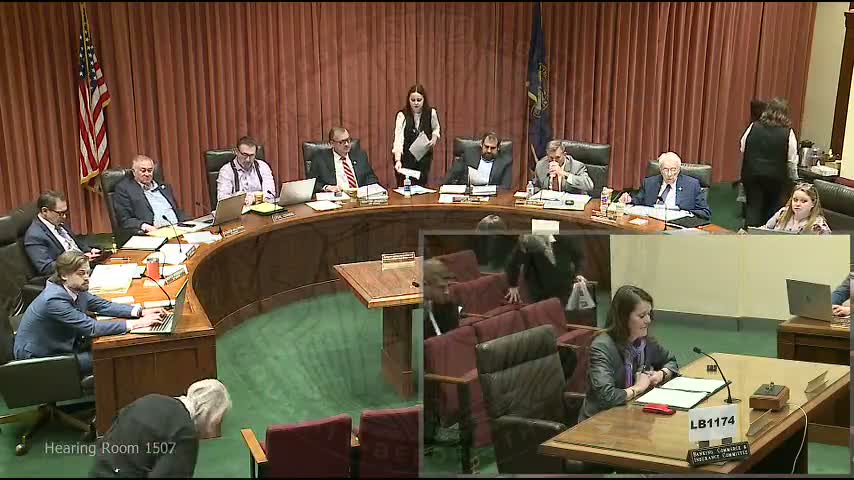
Summary
Kathleen Kauth proposed LB 11-74 to impose a remittance transfer tax (2% general, 20% to federal "foreign adversaries"). Supporters said it keeps money in Nebraska; opponents — fintech firms, money transmitters, immigrant advocates and agricultural groups — warned it is regressive, will push transfers underground or across state lines and could harm farm labor recruitment.
Sen. Kathleen Kauth introduced LB 11-74 before the Banking, Commerce and Insurance Committee, proposing a remittance transfer tax intended to keep money earned in Nebraska circulating in-state and to raise revenue. Under the bill, most remittances would be taxed at 2%, while transfers to federally designated "foreign adversaries" would be taxed at 20%.
"The bill introduces a remittance transfer tax on funds transferred outside The United States by licensees," Kauth said, describing exemptions for active-duty military and a sponsor amendment that would align parts of the proposal with a federal executive order. She said the tax is intended to discourage funds leaving Nebraska and to improve transparency about international outflows.
Agency witnesses had mixed views. James Kamm, Nebraska tax commissioner, said the Department of Revenue can implement the tax and noted implementation costs but said the department could enforce the levy as an excise tax. Kelly Lammers from the Department of Banking and Finance said the department could collect transaction data; she explained collection was intended at transaction time and described how the department licenses money transmitters.
Opposition testimony was extensive. Money-service trade groups, Western Union, fintech associations and immigrant-rights organizations warned the tax is regressive and would reduce law enforcement visibility by driving business to informal or out-of-state channels. Kathy Thomashevsky (Money Service Business Association) and Tim Daly (Western Union) argued higher costs make senders shift to unregulated alternatives or travel across state lines to avoid the levy. Agricultural groups including the Nebraska Pork Producers Association urged carve-outs for visa-dependent workforces (TN visa holders), saying even a modest 2% charge reduces take-home pay and could affect recruitment.
Immigrant advocates called the measure punitive toward families who send small sums home for basic needs. Cesar Garcia of the Immigrant Communities Program said the bill would disproportionately burden low-income Nebraskans and urged the committee not to advance it. The hearing included technical questions about how the tax would be administered, how to determine sender location, and which providers would qualify. No committee action was taken at the conclusion of the hearing.