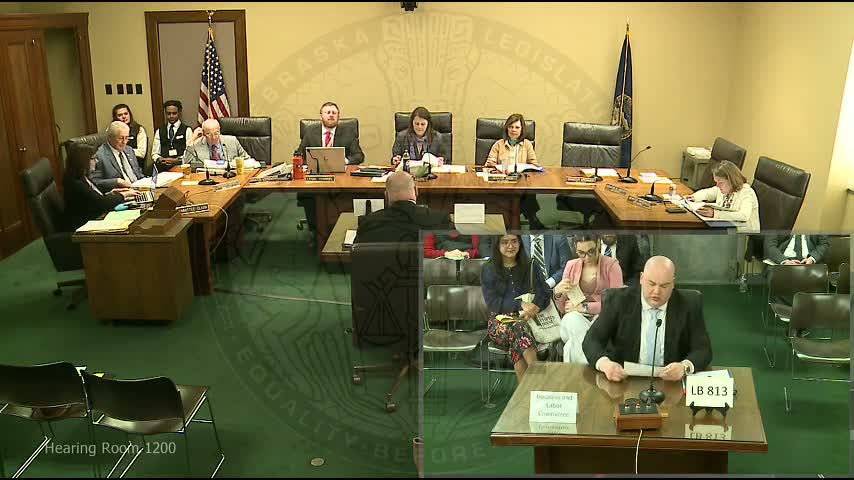
Nebraska committee weighs narrow fix to let app-based drivers pick up orders at platform-run 'DashMarts'
Loading...
Summary
The Business & Labor Committee heard testimony on LB813, a bill that would clarify that app-based delivery workers ("marketplace network contractors") can pick up orders at platform-operated micro-fulfillment centers without being reclassified as employees. DoorDash and other proponents said the change protects worker flexibility and spurs investment; labor groups warned it could permit employee misclassification.
The Business & Labor Committee examined LB813, a technical change to Nebraska's employment-security law aimed at preserving the flexible status of app-based delivery workers known as marketplace network contractors.
Sean Flowerday, staff for Senator Bostar, introduced the bill as a cleanup to last year's LB229 and said it clarifies that a marketplace network contractor may enter facilities operated by a marketplace network platform — such as a DashMart — without being misclassified as an employee. "The goal here is simple: to correct a definition to accurately reflect how modern app‑based and platform‑based work arrangements operate," Flowerday said.
Tyler St. Clair, manager of government relations for DoorDash's Central Region, told the committee LB813 "does one thing": it clarifies that Dashers can pick up deliveries at platform-operated stores. He said DashMarts — local micro-fulfillment centers that stock everyday essentials for rapid delivery — can expand convenience for consumers and create investment and jobs while maintaining independent-contractor status for delivery workers. St. Clair cited company figures, saying nearly 50,000 Nebraskans work as Dashers and DoorDash participation generates significant economic activity in the state.
Committee members pressed St. Clair on operational details. Senators asked whether DashMart associates are employees (St. Clair said yes), whether drivers carry identification linking them to DashMart, what controls the platform exercises over routes and performance, what background checks and insurance coverages apply, and how DashMarts' urban focus affects rural grocers. St. Clair said Dashers log in and out of the platform at will, routes are optimized through Google Maps but drivers may choose alternate roads, DoorDash performs background checks and provides insurance during "active delivery periods," and DashMarts are primarily planned for dense urban areas.
Opposing testimony came from Felicia Hilton of the North Central States Regional Council of Carpenters, who argued the original law's language was intended to prevent apps from using brick‑and‑mortar facilities to disguise employer relationships. "If they're driving for DashMart and DashMart is the app employing them and has a physical space, these drivers would be considered employees under our assessment," Hilton said, noting that company-provided insurance and managerial direction weigh toward employee status.
There were no votes on the bill in the hearing. The committee's questions highlighted where LB813's supporters and opponents diverge: supporters emphasize preserving flexible work and attracting investment, while opponents warn that platform-controlled facilities or insurance could indicate an employment relationship that should carry traditional employer obligations.
The committee will consider proposed language and testimony as it decides whether to advance LB813 to general file.
Ending: The hearing record for LB813 closed after proponents and opponents finished testimony; committee staff will draft potential amendments based on the questions raised.