DHHS promises validation and recovery plans after federal OIG flags potential Medicaid overpayments for ABA services

Joint Legislative Committee on Government Oversight · February 14, 2026

Get AI-powered insights, summaries, and transcripts

Subscribe
AI-Generated Content: All content on this page was generated by AI to highlight key points from the meeting. For complete details and context, we recommend watching the full video. so we can fix them.

Summary

At an oversight hearing, DHHS Commissioner Sarah Gagne Holmes outlined the department's program‑integrity units and said staff are validating an OIG ABA audit that used sampling to flag potential improper payments; DHHS said it will issue provider notices where findings are substantiated and pursue recoupment and referrals to the Attorney General when evidence meets legal thresholds.

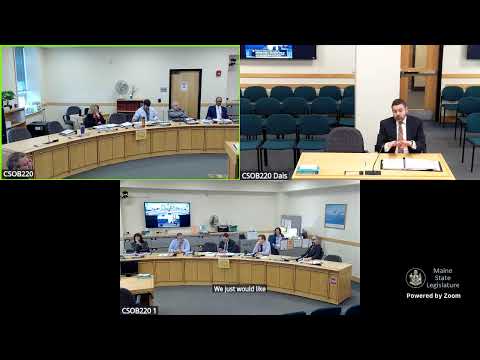
The Department of Health and Human Services briefed the Joint Legislative Committee on Government Oversight about how Maine identifies, investigates and responds to possible improper Medicaid payments following a recent federal Office of Inspector General (OIG) review of applied behavior analysis (ABA) services.

Commissioner Sarah Gagne Holmes described the department’s layered program‑integrity framework: the Division of Audit conducts cost‑settlement and financial reviews for cost‑settled providers; the Fraud Investigation and Recovery Unit focuses on recipient fraud and intentional program violations; and the Program Integrity Unit (Office of MaineCare Services) runs surveillance, data analytics, post‑payment reviews and referrals to the Health Care Crimes Unit at the Attorney General’s Office when a credible allegation of fraud arises.

Bill Logan (Program Integrity) told the committee that the unit generates desk and post‑payment reviews, uses electronic visit verification and targeted data analytics, and applies a tiered sanction model: 100% recoupment when services were not supported or delivered by qualified staff, and scaled penalties (0–25% reductions) for documentation errors depending on severity. He explained that when a credible allegation of fraud is identified, federal rules typically require a payment suspension unless a narrow good‑cause exception (for example, an active law‑enforcement request to delay) applies.

On the OIG ABA report, which public summaries extrapolated to a multi‑million‑dollar potential improper‑payment estimate, DHHS witnesses said the OIG used statistical sampling and that the department is now validating those sampled records against MaineCare rules. "We are reviewing the specific medical records OIG reviewed to determine whether we concur, partially concur, or disagree," Bill Logan said. Where DHHS concurs with OIG findings, the department said it will issue notices of violation to providers, seek recoupment of overpayments, and refer matters to the Attorney General’s Health Care Crimes Unit if evidence indicates criminal intent.

Committee members pressed repeatedly about scale, timing and recoverability — whether providers might close and render debts unrecoverable. Logan and the commissioner explained the difference between an established debt and the practical limits of collection: when a provider dissolves, the state’s ability to recover depends on available assets and the financial‑recovery processes managed by DHHS financial services and collections teams. The department also noted that not every instance flagged by OIG will translate to a 100% recoupment once the department completes its validation and allows providers to submit missing documentation.

Quote: “When concerns meet the legal standard of a credible allegation of fraud, we refer those matters to the Office of the Attorney General,” Commissioner Gagne Holmes said. “That separation protects due process and preserves investigations.”

Ending: DHHS is preparing a corrective‑action response to OIG and expects to complete the department’s validation of sampled records in the weeks after the hearing; the committee deferred further action while DHHS completes its review and promised to revisit the matter at a later meeting.