Get Full Government Meeting Transcripts, Videos, & Alerts Forever!
Get email alerts on the Snow Days And Operations topic
No spam. Unsubscribe anytime.
Bethany Public Schools board details snow‑day decision, approves payroll and personnel actions
Summary
Board members unanimously approved consent and personnel items and heard a detailed superintendent timeline of a multi‑day snow event that weighed safety, liability and costs (noting an $8,100 parking‑lot snow‑removal expense and discussion of a $3,500 contractor quote); district explained options for makeup days and virtual‑day limits under state law.
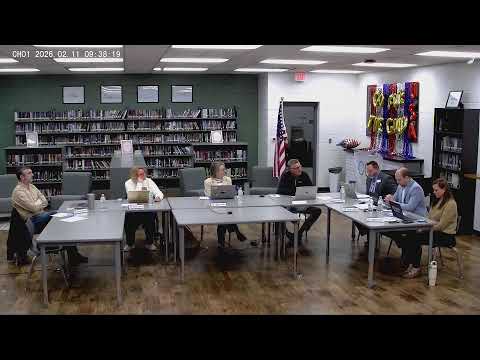
The Bethany Public Schools Board of Education met and unanimously approved routine financial encumbrances and a set of personnel actions after a 23‑minute executive session. The meeting’s central discussion was a lengthy superintendent briefing explaining how the district decided to close schools during a prolonged winter event, the operational constraints the district faced, and the trade‑offs considered for makeup days and virtual instruction.
The superintendent outlined the chronology of forecasts from the National Weather Service and internal district calls that led administrators to weigh early release, late start and full closure. The district said it monitors NWS webinars and local reports and noted a wide forecast window (noon–4 p.m.), which complicated any decision to release students early. The superintendent described road and sidewalk conditions observed in multiple neighborhoods and said they decided closures were necessary because many feeder roads and pedestrian routes were unsafe.
The board discussed coordination with the City of Bethany about clearing the block immediately adjacent to school. Administration said the city declined to clear public roadways for other districts, and district contractors declined to salt public roads without city permission because of liability and potential roadway damage. The superintendent told the board that a private contractor quoted roughly $3,500 to clear the block and that the district had paid $8,100 for parking‑lot snow removal and salting, an expense the administration said was justified to reduce slip‑and‑fall risk on district property.
The district laid out options to recover lost instructional time: converting an April calendar day (currently labeled as a snow‑makeup day), adding minutes across the school year or adding makeup days at the end of the term. Board members and staff noted a state law change limiting future use of virtual days: starting next year, virtual days count only if a state of emergency is declared and districts may use a maximum of two such days under that designation.
Administration also emphasized a closed‑campus approach during marginal conditions to reduce the risk of student drivers leaving for unsafe local roads and said families who judged travel unsafe would be excused: "If you say it wasn't safe for my kid, we'll say excused absence." The board praised communication with families and staff for helping manage the extended closure.
On fiscal matters the board approved general fund encumbrances and change orders (general fund encumbrances listed at $17,026.36; change orders $14,411.89) and reviewed several purchase orders, including technology parts from Amazon and E‑Rate consulting services (Sigma Technology; district noted a five‑year E‑Rate budget with federal discounts). The board approved a Marshall Environmental Management PO for air‑quality testing at the high school office after staff said prior testing three years ago had been normal but due diligence required a recheck.
Following an executive session authorized under 25 O.S. §307(B)(1), the board returned to public session and approved employment appointments listed in Addendum A and accepted resignations/retirements listed in Addenda B and C by roll‑call votes. The board’s recorded roll calls showed all voting members recorded in those votes as affirmative; meeting minutes state no votes or actions were taken during executive session.
Administrators closed with staff reports and recognitions: the high school was named to the AP School Honor Roll (bronze designation) for the prior graduating cohort’s AP participation and scores; the elementary applied for an OETT K–20 technology grant with matching funds planned; and several student athletes and teams were celebrated for recent qualifications and rankings. The board adjourned after noting upcoming events including parent‑teacher conferences and spring break.
The meeting record shows the board debated operational trade‑offs, documented specific cost figures for snow removal and described legal/liability limits the district faced when considering clearing public roadways. Next steps noted by the superintendent include possible calendar modifications and continued monitoring of state legislative proposals affecting district revenue and virtual‑day policy.