
Kentucky oversight board hears bill to allow rehiring of retired police after 15 years amid funding questions
Get AI-powered insights, summaries, and transcripts
Subscribe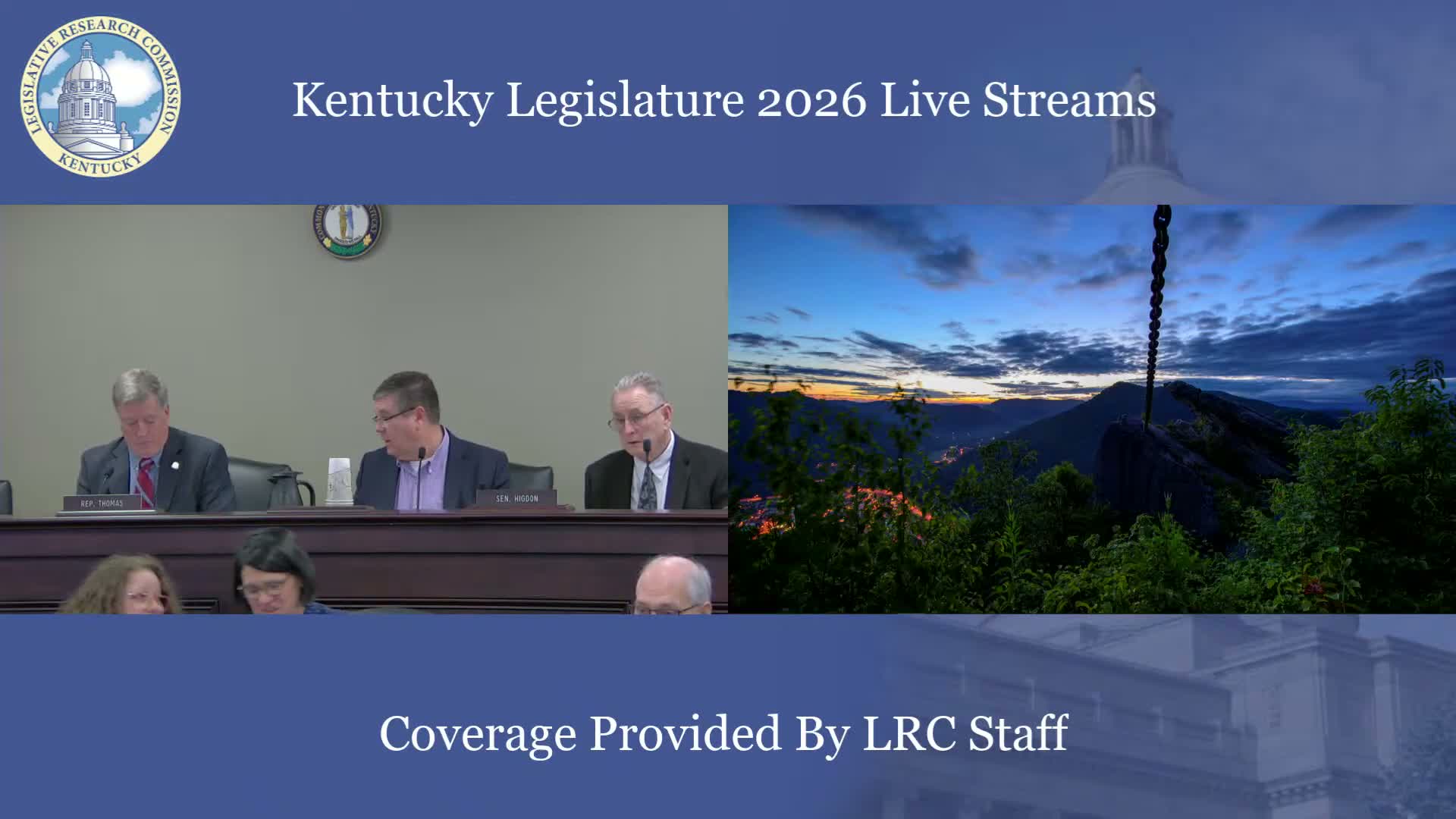
Summary
Representative Emily Callaway told the Public Pension Oversight Board that House Bill 213 would let cities and counties rehire retired police officers with 15 years of service and optionally offer private insurance, while KPPA staff and members warned the change could reduce employer contributions that help pay down pension unfunded liabilities.
Representative Emily Callaway, the sponsor of House Bill 213, told the Public Pension Oversight Board on Feb. 13 that the bill would change one rehire qualifier "from 20 years to 15 years of service for the retired police officer" and allow local employers the option to offer private-sector insurance to rehired retirees in lieu of additional retirement contributions.
"This bill honors the spirit" of the existing rehiring statute, Callaway said, and she emphasized it "does not allow for double dipping of our benefits" or change retirement-tier rules. Brandon Lincoln, Kentucky State FOP vice president, described the proposal as a recruitment and retention tool for understaffed police departments.
Board members pressed the sponsor on the fiscal mechanics. Co‑chair Higdon asked directly whether lowering the service threshold "creates an unfunded liability," urging that the committee examine whether employers should be required to pay the pension system's "normal cost" for rehired workers rather than leaving the savings to the pension systems. Several senators and representatives said the change could reduce contributions that today help pay down the systems' unfunded liabilities.
Officials from the Kentucky Public Pensions Authority (KPPA) told the board they do not read House Bill 213 as changing the number of exemption slots currently allowed; rather, their preliminary view is the bill "opens up a bigger pool" of eligible retirees without increasing the number of seats that are exempt from regular contribution requirements. KPPA said it is working to quantify any fiscal effects and cautioned that, for some proposals, there will be a measurable fiscal impact that requires further analysis.
Supporters said the bill is narrowly focused on specific agencies, including the FOP, KLC and LMPD, and is intended to allow jurisdictions facing staffing shortages to hire experienced retirees without creating a new retirement account for them. Multiple lawmakers said caps in the draft are designed to prevent departments from replacing their entire staff with retired hires.
The board did not take a vote on House Bill 213. Representative Hale, chair of the House state government committee who spoke on the bill's trajectory, said the measure received broad support in committee and "I foresee this going to the House floor, and I foresee this passing on the House floor," while acknowledging more technical work could follow in the Senate.
What happens next: KPPA will continue work on actuarial estimates and sponsors indicated willingness to work with pension oversight members on language that addresses employer contribution questions before the bill advances.