
ETHS students lead waste and bike-shelter projects as district explores $12M energy contract
Get AI-powered insights, summaries, and transcripts
Subscribe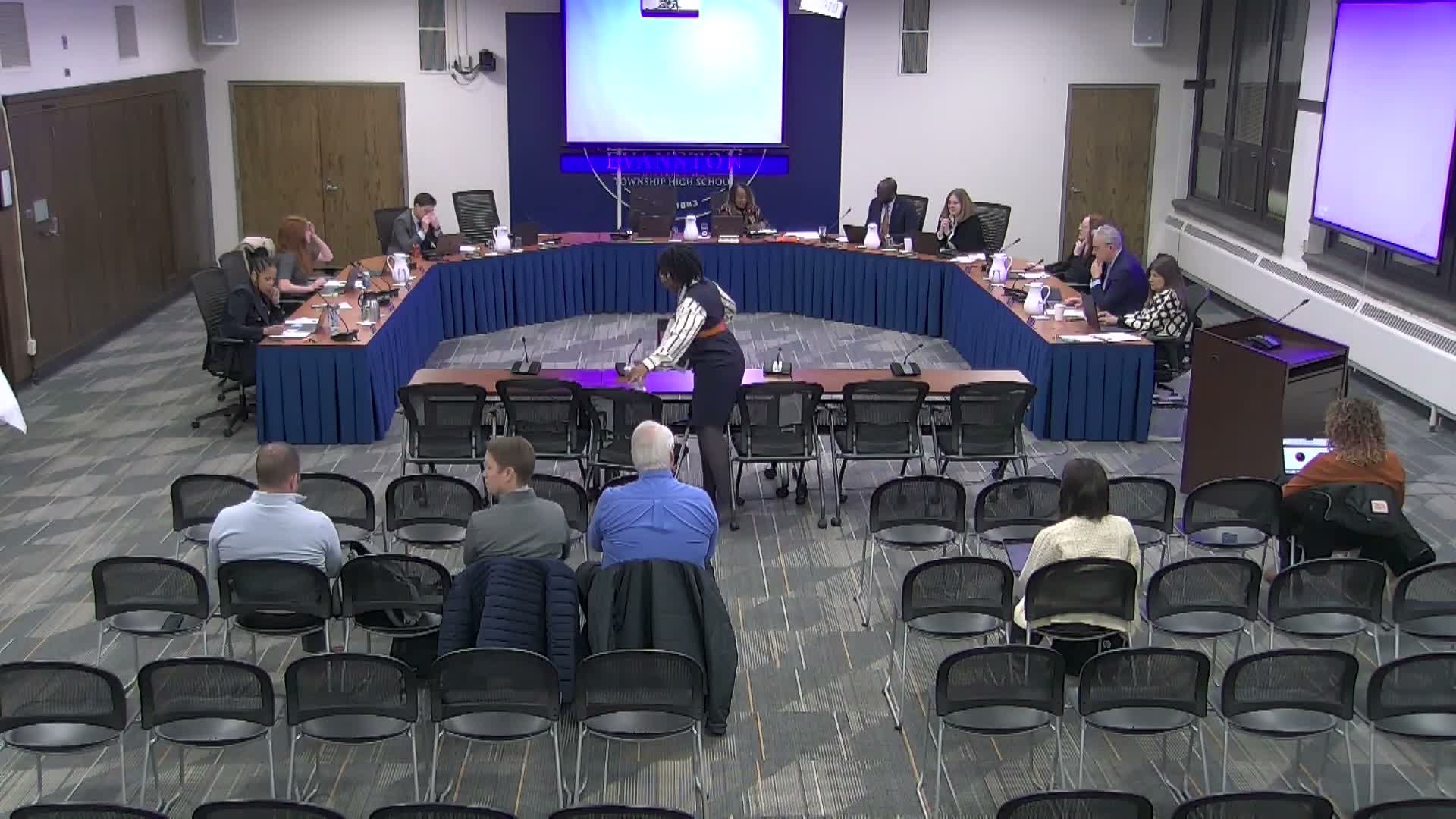
Summary
District sustainability director John Crawford highlighted student-led projects (a $5,000-funded bike shelter and a waste-audit that could remove 350 trash cans) and introduced a possible $12 million Honeywell energy-savings performance contract projected to save about $600,000 annually and reduce district energy use by roughly 42%.
John Crawford, the district's director of operations and sustainability, framed the Feb. 9 update around the two-year anniversary of the ETHS Green New Deal policy and placed students at the center of the work. Two students presented progress: Olin described a bike-shelter project funded by a $5,000 grant and coordinated with Northwestern architectural students; "once the first concrete pillars are in, we'll be able to partner with our geometry and construction programs to build some more of the roofing," Olin said.
Izzy, a senior and Climate Action Evanston board member, outlined a Climate Action Accelerator initiative and a schoolwide waste audit. The audit found the district could remove over 350 garbage cans and divert more than 64,000 plastic liners from landfill each year. Crawford said the pilot launch produced mixed results but underscored strong student leadership and measurable operational benefits.
Crawford and the administration then introduced an energy savings performance contracting (ESPC) proposal with Honeywell. John Rocco of Honeywell presented preliminary engineering estimates and financing options: "we can save approximately $600,000 a year," he said, and described a $12,000,000 project financed over 20 years that would pair renewable energy (solar) with other systems upgrades. Rocco said the savings estimate reflects roughly a 42% reduction in the district's annual utility spend and that Honeywell would perform an investment-grade audit to produce guaranteed construction prices and guaranteed savings. He explained that if guaranteed savings fall short, Honeywell would be contractually responsible for the difference.
Board members asked detailed questions about sources of upfront capital, interest costs, and schedule. Honeywell described two financing routes: Honeywell's finance arm or district-issued debt certificates, with the project completed before the first payment is required under typical contract terms. Administrators said they would receive an investment-grade audit and come back to the board with firm bids, financing terms, and timeline options before any contract action.
District staff also noted federal tax credits and Illinois renewable energy certificates would contribute materially to the project's financial case. Crawford and board members emphasized student engagement opportunities during construction and curriculum integration for CTE/STEM pathways.
Board members widely praised the student presenters and supported continued exploration of both the student projects and the Honeywell partnership; administrators committed to returning with more detailed scopes, financing terms, and firm contractor bids.